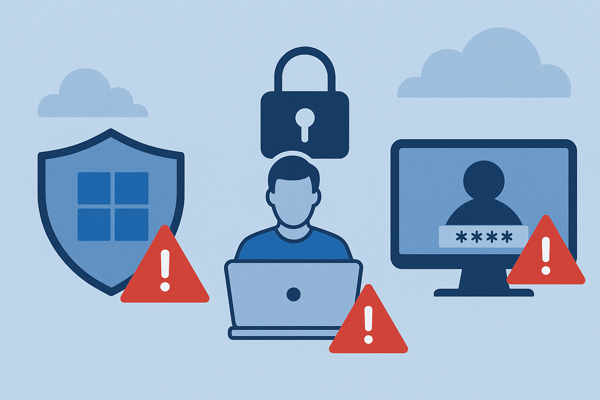
Account Recovery Is Becoming the New Identity Attack Surface

As passkeys and phishing-resistant authentication reduce password risk, attackers will move pressure to the recovery plane.

The industry is moving in the right direction.

Passkeys, FIDO2/WebAuthn, hardware security keys, conditional access, better MFA policies, and risk-based sign-in controls are all meaningful improvements. They reduce entire classes of credential theft. They make phishing harder. They remove reusable passwords from many authentication ceremonies. They shift more of the security burden from user judgment to protocol design.

That is good.

But it is not the finish line.

In my recent passkeys article, I called out a point that deserves its own treatment: passkeys do not solve weak account recovery, help desk social engineering, stolen session tokens, OAuth consent abuse, unmanaged vendor access, or excessive privilege. They are a major step forward, but they do not remove the rest of the identity attack surface. 

That matters because attackers adapt.

If passwords become harder to steal, guess, spray, reuse, or phish, attackers will apply pressure somewhere else. They will go where the assurance is weaker, the workflows are more manual, the exceptions are more frequent, and the blast radius is still large.

Increasingly, that place is account recovery.

PassKey

The Inversion Test

A useful way to think about this is inversion.

Do not start with the defender’s roadmap. Start with the attacker’s question:

Once passwords disappear, where would I attack next?

The answer is usually not exotic.

I would attack the process that lets a user back into the account after they lose the device.

I would attack the support workflow that removes an authenticator.

I would attack the exception path that grants temporary access.

I would attack the SaaS admin who can approve OAuth grants.

I would attack the vendor portal that still uses email-based recovery.

I would steal a browser session instead of a password.

I would enroll a new device.

I would persuade the help desk to do for me what the authentication system will not.

That is the problem.

Authentication is getting stronger, but recovery is often still treated like customer service, not like privileged access.

The Recovery Plane Is Bigger Than Password Reset

When many teams hear “account recovery,” they think about password reset.

That definition is too narrow.

The recovery plane includes every path that can restore, replace, bypass, reset, re-enroll, approve, or extend access after normal authentication fails or becomes inconvenient.

That includes:

  • Password reset and account unlock workflows
  • MFA reset
  • Authenticator removal
  • Passkey re-enrollment
  • Lost phone and device replacement processes
  • Temporary access passes
  • Emergency access procedures
  • Help desk verification scripts
  • Vendor support portals
  • OAuth consent grants
  • Long-lived sessions
  • Break-glass accounts
  • Shared accounts
  • Offboarding workflows

That is a lot of surface area.

It is also where many organizations have the least visibility.

They can tell you how many users enrolled a passkey. They can tell you how many privileged users have hardware keys. They can show a nice adoption dashboard.

But ask how many privileged recovery events occurred last quarter, how many required human exception, how often callbacks used known-good numbers, how many OAuth grants have offline access, or how many vendor admins can recover access without the organization’s IdP, and the room gets quieter.

That is not because security teams do not care.

It is because the measurements have not caught up to the new risk.

Passkey Adoption Is Not the Same as Recovery Risk Reduction

Most passkey programs measure adoption.

That is understandable. Adoption matters. A phishing-resistant authenticator that nobody uses is not a control; it is a feature sitting idle.

But adoption alone can become a vanity metric.

A dashboard that says “82% of users have enrolled passkeys” may look good while the recovery plane remains weak. A privileged administrator may have a hardware key and still be vulnerable if a support agent can remove that key after a convincing phone call. A finance user may authenticate with a passkey and still have an OAuth grant that allows a third-party application to read mail and files. A SaaS admin may have phishing-resistant login and still carry a session token that can be replayed from an infected endpoint.

In other words, the front door can improve while the side doors remain unchanged.

The right question is not only:

How many users have passkeys?

The better question is:

Can an attacker still recover, re-enroll, delegate, or persist access without satisfying the same level of assurance we require at login?

That question changes the program.

Why Attackers Like Recovery Paths

Recovery paths are attractive because they are designed for failure.

Users lose phones. Laptops die. Executives travel. Hardware keys get left at home. Contractors change devices. Mergers bring strange identity histories. Help desks are measured on resolution time. Business units want access restored now. Support teams are asked to be helpful, empathetic, and fast.

Attackers understand this.

They do not need to defeat your strongest control if they can trigger a workflow that temporarily removes it. They do not need a zero-day if they can convince a support agent that the CFO is locked out before payroll closes. They do not need to phish a password if a malicious OAuth application can be granted the right permissions. They do not need to reauthenticate if a stolen session or refresh token remains valid.

This is second-order identity risk.

The first-order improvement is passwordless authentication.

The second-order attacker response is pressure on the lifecycle around authentication.

That is where many programs are underbuilt.

Help Desks Are Now Part of the Identity Control Plane

Help desk directors should be in the room for passkey planning.

Not after rollout.

Before rollout.

The support function is no longer just a service channel. In a passwordless environment, it becomes one of the places where identity assurance is either preserved or quietly downgraded.

When a support agent removes an authenticator, issues a temporary access pass, resets MFA, unlocks an account, updates a phone number, or approves device replacement, that agent may be changing the effective security posture of the identity.

For normal users, that can still matter.

For privileged users, it can be catastrophic.

Scattered Spider is a useful warning here. CISA has described the group’s use of social engineering to convince IT help desk personnel to reset passwords and MFA tokens, and CISA’s mitigation guidance emphasizes phishing-resistant MFA such as FIDO/WebAuthn. 

The broader lesson is that support and recovery workflows can become identity attack paths when attackers cannot easily defeat the primary login ceremony.

The lesson is simple: recovery for privileged users should not be a normal ticket.

It should be a controlled ceremony.

That means strong proofing, out-of-band verification using known-good contact information, two-person approval, time-bound access, explicit logging, alerting to security operations, and post-event review.

It also means the help desk needs permission to slow down when risk is high.

“Fast resolution” cannot be the only service metric when the request changes identity assurance.

Fallback Methods Are the Old Attack Surface Wearing a New Name

Fallback methods are often kept for good reasons.

They reduce lockouts. They make pilots easier. They help executives. They make support less painful. They allow legacy applications to keep working. They reduce friction for BYOD and remote users.

But they also preserve the attack surface that passkeys were meant to reduce.

SMS, voice OTP, email OTP, TOTP, push approval, security questions, personal email recovery, and “call the help desk” workflows can become the weakest link in an otherwise strong authentication program.

That does not mean every fallback disappears on day one.

It means fallback must be governed by risk tier, not convenience.

For privileged users, weak fallback should be removed first.

For high-risk business users, fallback should be limited, logged, and reviewed.

For standard users, fallback should be transitional and measured.

For vendors, fallback should be part of the access contract.

For break-glass accounts, fallback should be designed, vaulted, monitored, and tested.

Do not let fallback become the permanent exception nobody owns.

Device Replacement Is a Security Event

Passkeys change the device lifecycle.

If the authenticator is a phone, laptop, platform credential, password manager, sync fabric, or hardware key, then device loss and device replacement become security-sensitive workflows.

A new phone is not just a new phone.

It may be the path to a new authenticator.

A laptop rebuild is not just an endpoint ticket.

It may become a passkey re-enrollment event.

A password manager recovery is not just a user convenience problem.

It may restore access to synced credentials.

NIST’s current SP 800-63B language draws an important assurance distinction here: syncable authenticators are not allowed at AAL3 because syncing requires the private key to be exportable, while AAL3 requires stronger hardware-protected key handling. 

That distinction should shape enterprise recovery design.

The organization should know which authenticators are allowed for which risk tiers, whether credentials are synced or device-bound, how many authenticators each user must maintain, what happens when one is lost, and who can approve replacement.

For high-risk roles, device replacement should trigger stronger checks than normal sign-in.

If the attacker’s goal is to become the new device, then treating new-device enrollment as routine is a mistake.

OAuth Grants Are Recovery’s Cousin

OAuth consent is not account recovery in the traditional sense, but it belongs in the same risk conversation.

Why?

Because OAuth grants can create durable delegated access that survives the user’s normal login ceremony. In many attacks, the adversary does not need the password. The user is tricked into granting a malicious or compromised application access to mail, files, contacts, or other SaaS data. The attacker then operates through authorized application access rather than a classic interactive login.

Microsoft describes consent phishing as an attack where users are tricked into granting permissions to malicious cloud applications, allowing those applications to access legitimate cloud services and user data. Microsoft also recommends auditing applications and consented permissions, limiting user consent, and monitoring suspicious application behavior. 

Red Canary describes application access token theft as a technique adversaries use to gain unauthorized access to SaaS, cloud, and containerized resources, including through OAuth consent grant attacks. 

That is an identity bypass from a governance point of view.

If your passkey program does not include connected-app review, admin consent workflows, publisher verification, permission classification, and revocation procedures, then you have left a major identity path out of scope.

This is especially important in Microsoft 365, Google Workspace, Salesforce, GitHub, Slack, Box, Dropbox, and other SaaS-heavy environments where business productivity depends on integrations.

Security teams should ask:

  • Who can consent to applications?
  • Which grants include mail, files, directory, impersonation, or offline access?
  • Which applications are publisher verified?
  • Which grants are unused, stale, or excessive?
  • Which service principals have tenant-wide reach?
  • How quickly can suspicious consent be revoked?
  • Are OAuth changes visible in the SIEM?

Do not celebrate passwordless authentication while ignoring delegated access.

Sessions Are Where Authentication Becomes Authorization

Another uncomfortable point: authentication strength does not automatically protect the entire session.

After authentication succeeds, applications issue session tokens, cookies, and refresh tokens. Those artifacts often become the practical proof that the user is already trusted. If malware, a phishing proxy, browser compromise, or endpoint theft captures that token, the attacker may be able to bypass the login ceremony entirely.

Ping Identity describes session hijacking as reuse of a stolen session token to impersonate a logged-in user; because the attack occurs after login, MFA may already be satisfied. 

Microsoft has also published guidance on cloud token theft, including prevention, detection, and response considerations for token-based attacks. 

That is why session governance belongs in the passkey roadmap.

Shorter session lifetimes, device compliance, token binding where available, continuous access evaluation, impossible travel detection, user-agent and device mismatch analytics, rapid revocation, EDR coverage, browser hardening, and SaaS session visibility all matter.

Passkeys reduce credential theft.

They do not make stolen sessions harmless.

A Recovery-Plane Risk Score

Organizations need a way to score recovery paths the same way they score applications, data, vendors, and vulnerabilities.

Here is a practical model.

Factor Question High-Risk Signal
Proof strength How strongly does the process verify the person requesting recovery? Email access, caller ID, personal information, or manager approval alone.
Social-engineering exposure Can a human be pressured into overriding controls? Phone-only recovery, urgent executive exceptions, vague escalation rules.
Exception frequency How often is the standard process bypassed? Frequent temporary access, recurring VIP exceptions, non-expiring risk acceptances.
Blast radius What can the recovered account access? Admin roles, finance workflows, HR data, developer systems, mailboxes, cloud consoles.
Persistence Does recovery create long-lived access? Refresh tokens, remembered devices, OAuth grants, persistent sessions, new authenticators.
Visibility Can security see and investigate the event? No SIEM logging, no alerting, limited ticket context, SaaS-only logs.
Ownership Who governs the path? No control owner, no review cadence, split responsibility between IAM and support.

Score each recovery path from 1 to 5 on each factor.

Then multiply or weight by user tier.

A recovery path for a standard user with limited SaaS access is not the same as a recovery path for a global admin, payroll approver, domain admin, developer with production access, or vendor administrator.

Do not flatten the organization.

Risk is not evenly distributed. Recovery controls should not be either.

What Leaders Should Measure

CISOs and IAM leaders should add recovery-plane metrics to identity dashboards.

At minimum, track:

  • Recovery events by user tier
  • Authenticator resets and removals
  • New authenticator enrollments
  • Temporary access passes
  • Privileged recovery exceptions
  • Help desk recovery requests denied or escalated
  • Recovery events outside business hours
  • Users with fewer than two approved authenticators
  • Weak fallback still enabled by tier
  • OAuth grants by risk level
  • Long-lived session exceptions
  • Third-party accounts without phishing-resistant authentication
  • Vendor support paths that bypass the primary IdP
  • Open recovery exceptions by owner and expiration date

The executive dashboard should answer a plain question:

Can someone get back into a high-risk account through a process weaker than the process required to sign in?

If the answer is yes, the organization has work to do.

A Practical 90-Day Plan

Days 0–30: Inventory the Recovery Plane

Start with the systems that matter most:

  • IdP
  • Email
  • Endpoint management
  • PAM
  • Cloud consoles
  • Finance systems
  • HR systems
  • Developer platforms
  • Backup consoles
  • EDR
  • SIEM
  • Ticketing
  • Major SaaS applications

For each system, document:

  • Normal authentication method
  • Recovery method
  • Fallback methods
  • Approval path
  • Required proof
  • Generated logs
  • Alerts
  • Temporary access lifetime
  • Post-recovery review process

Do not start by buying another tool.

Start by finding the paths.

Days 31–60: Harden High-Risk Recovery

Prioritize administrators, executives, finance, HR, developers, help desk staff, security staff, and third parties with privileged or sensitive access.

For those users:

  • Require at least two approved authenticators before enforcement.
  • Remove weak fallback where feasible.
  • Require device-bound passkeys or hardware keys for privileged access.
  • Implement two-person approval for privileged authenticator reset.
  • Use known-good callback procedures.
  • Alert on authenticator removal and re-enrollment.
  • Require post-recovery review for high-risk accounts.

This is also the time to train the help desk on adversarial recovery scenarios.

Not generic security awareness.

Specific scripts.

Specific red flags.

Specific escalation authority.

The help desk needs to know when a request is no longer just a request.

It is a security event.

Days 61–90: Govern Tokens, Grants, Vendors, and Exceptions

Once the human recovery paths are under control, expand to adjacent identity persistence.

Review OAuth grants and connected applications.

Restrict user consent for higher-risk permissions.

Implement admin consent workflows.

Review refresh token and session lifetime policies.

Test rapid session revocation.

Identify vendor-controlled recovery paths.

Require phishing-resistant MFA for vendors with privileged access.

Publish an exception register with owners and expiration dates.

Run a tabletop exercise against recovery abuse.

The tabletop should be blunt:

An attacker has convinced the help desk to remove MFA from a finance administrator. What alerts fire? Who knows? How fast can we revoke sessions, disable OAuth grants, suspend the account, preserve evidence, and determine blast radius?

If that exercise feels uncomfortable, good.

That is the point.

Policy Baseline Language

Here is practical language to adapt:

Account recovery, authenticator reset, passkey registration, passkey removal, device replacement, temporary access issuance, OAuth consent approval, and session revocation are security-sensitive identity lifecycle events. These events must be governed by risk tier, verified using approved proofing methods, logged centrally, monitored for abuse, and reviewed for privileged or high-impact users. Recovery processes must not allow access to be restored through a weaker assurance path than the access being recovered without documented, time-bound risk acceptance.

That last sentence is the core principle.

Do not let recovery be weaker than login.

Where Compliance and Risk Teams Fit

Compliance teams should pay attention because recovery-plane risk creates evidence problems.

When auditors ask whether privileged access is controlled, the answer cannot stop at:

We require MFA.

The next questions are predictable:

  • How is MFA reset?
  • Who can approve a reset?
  • Are approvals logged?
  • Can support staff bypass the policy?
  • Are exceptions time-bound?
  • Are recovery events reviewed?
  • Are vendor recovery paths included?
  • Are OAuth grants reviewed?
  • Can sessions be revoked?

Those are not theoretical questions.

They are control design questions.

They are also incident response questions.

A mature identity program should be able to produce evidence for recovery events the same way it produces evidence for access reviews, privileged access approvals, and policy exceptions.

The Bottom Line

Passkeys are a real improvement.

Phishing-resistant authentication is worth doing.

Hardware keys for privileged users are worth the operational effort.

Conditional access, MFA cleanup, passkey rollout roadmaps, and fallback reduction all matter.

But the next identity fight is not only at login.

It is in recovery.

It is in help desk workflows.

It is in device replacement.

It is in OAuth consent.

It is in session persistence.

It is in vendor support paths.

It is in the exception process.

Attackers follow pressure. As the password attack surface shrinks, the recovery attack surface becomes more valuable.

So build for that reality now.

Measure recovery-plane risk.

Score recovery paths by proof strength, social-engineering exposure, exception frequency, persistence, visibility, ownership, and blast radius.

Harden the workflows that can restore high-impact access.

Give the help desk better procedures and the authority to use them.

Govern OAuth and sessions as part of identity, not as unrelated SaaS hygiene.

Treat vendor access and support recovery as part of the enterprise control plane.

The goal is not to make recovery impossible.

People will lose devices. Executives will travel. Hardware will fail. Business will need continuity.

The goal is to make recovery trustworthy.

Because in a passwordless world, the attacker does not need your password if they can become your recovery event.

More Information and Assistance

At MicroSolved, Inc., we help organizations move from security intentions to operational reality. If you are rolling out passkeys, hardening MFA, modernizing IAM, or trying to understand whether your recovery plane is becoming your weakest identity control, we can help.

MicroSolved can assist with:

  • Identity architecture assessments
  • Passkey and phishing-resistant authentication roadmaps
  • Account recovery and help desk workflow hardening
  • OAuth grant and SaaS identity reviews
  • Privileged access and vendor access risk reduction
  • Identity logging and SIEM use-case development
  • Tabletop exercises and adversarial simulations focused on recovery abuse
  • Executive dashboards for identity risk reduction

Contact MicroSolved at +1.614.351.1237 or info@microsolved.com.

Relax. We’re on watch.


* AI tools were used as a research assistant for this content, but human moderation and writing are also included. The included images are AI-generated.

Rethinking Account Lockouts: Why 15 Minutes Isn’t a Strategy

There’s a moment in almost every security program where someone asks a deceptively simple question:

“Is 15 minutes a standard account lockout duration?”

The short answer? No.
The more honest answer? It’s common—but often wrong for the environment it’s deployed in.

And I’ve seen more than a few organizations learn that the hard way.

3Errors


The Myth of the “Standard” Lockout

If you go looking for authoritative guidance—from Center for Internet SecurityFFIEC, or CISA—you’ll notice something interesting:

They don’t tell you what number to use.

Instead, they consistently emphasize:

  • Risk-based decision making
  • Balancing usability and security
  • Detecting and responding to threats—not just blocking them

That’s not an accident. It’s an acknowledgment that static controls like lockouts are blunt instruments in a very dynamic threat landscape.


What We Actually See in the Real World

Across environments—financial services, healthcare, SaaS, manufacturing—the patterns are pretty consistent:

Setting Typical Range
Failed attempts before lockout 3–10
Lockout duration 5–30 minutes
Most common default 10–15 minutes

So yes, 15 minutes sits comfortably in the middle.

But “common” and “effective” are not the same thing.


Where 15 Minutes Breaks Down

1. It Punishes Users More Than Attackers

A 15-minute lockout sounds reasonable—until you multiply it.

  • A clinician locked out mid-shift
  • A call center agent missing SLAs
  • A trader unable to access systems during market hours

Now multiply that by repeated lockouts from cached credentials, mobile devices, or service accounts.

You don’t just have a security control—you have an operational problem.


2. It Doesn’t Stop Modern Attacks

Attackers have evolved. Most environments haven’t.

Today’s common attack patterns:

  • Password spraying (low-and-slow, avoids thresholds)
  • Credential stuffing (valid credentials, no lockout triggered)

A longer lockout duration doesn’t meaningfully impact either.

If anything, it gives a false sense of security while the real attack path goes untouched.


What Actually Works: A Layered Approach

This is where the conversation needs to shift—from “what’s the right number?” to “what’s the right strategy?”

1. Lockouts Are Supporting Controls—Not Primary Defenses

If you’re relying on lockouts as your main protection, you’re already behind.

At a minimum, you should be pairing with:

  • MFA everywhere it’s technically feasible
  • Conditional access (device, location, behavior)
  • Authentication throttling and smart detection

2. Tune for Risk, Not Defaults

A more balanced configuration tends to look like:

  • 5–10 failed attempts
  • 5–10 minute lockout
  • Reset counter after a defined cooldown window

This reduces user friction while still slowing down brute-force attempts.

More importantly—it acknowledges that lockouts are a speed bump, not a wall.


3. Progressive Delays Beat Hard Lockouts

One of the most underutilized strategies is progressive delay:

  • Attempts 1–2 → no delay
  • Attempts 3–5 → 30–60 second delay
  • Continued attempts → increasing delay

This approach:

  • Degrades attacker efficiency
  • Preserves user productivity
  • Avoids helpdesk spikes

It’s a far more surgical control than a blanket 15-minute lockout.


4. Detection Over Punishment

Modern security programs don’t just block—they observe.

You should be:

  • Logging all failed authentication attempts
  • Alerting on patterns (spraying, geographic anomalies)
  • Correlating identity signals across systems

Lockouts should be one signal among many—not the primary response.


Implementing This in Active Directory

Let’s get practical.

In on-prem Active Directory, you’re working primarily with Group Policy.

Recommended Baseline

In your domain or fine-grained password policy:

  • Account lockout threshold: 5–10 attempts
  • Account lockout duration: 5–10 minutes
  • Reset account lockout counter after: 10–15 minutes

Where to Configure

  • Group Policy Management Console (GPMC)
    • Computer Configuration → Policies → Windows Settings → Security Settings → Account Policies → Account Lockout Policy

Advanced Considerations

  • Use Fine-Grained Password Policies (FGPP) for high-risk accounts (admins, service accounts)
  • Monitor Event IDs:
    • 4625 (failed logon)
    • 4740 (account locked out)
  • Feed logs into your SIEM for correlation and alerting

Implementing This in Microsoft 365

In Microsoft 365, the model shifts significantly.

You don’t directly control “lockout duration” in the same way—because the platform is already applying smart lockout behavior.

Smart Lockout (Azure AD / Entra ID)

  • Automatically tracks failed attempts
  • Uses adaptive thresholds
  • Differentiates between familiar and unfamiliar locations

What You Should Do Instead

1. Enable and Enforce MFA

  • Conditional Access → Require MFA for all users (with staged rollout if needed)

2. Configure Conditional Access Policies

  • Block legacy authentication
  • Require compliant devices
  • Apply geographic restrictions where appropriate

3. Monitor Identity Signals

  • Azure AD Sign-in logs
  • Risky sign-ins and users
  • Integration with Defender for Identity / Sentinel

4. Tune Smart Lockout (if needed)

  • Default threshold is typically sufficient
  • Adjust only if you have a strong operational reason

The Bottom Line

A 15-minute lockout isn’t wrong.

It’s just incomplete.

  • ✔️ It’s common
  • ❌ It’s not a standard
  • ⚠️ It can create more operational pain than security value

The real shift is this:

Stop treating account lockouts as a primary control. Start treating them as part of a layered identity defense strategy.

Because in today’s environment, the goal isn’t just to block access.

It’s to understand it.


* AI tools were used as a research assistant for this content, but human moderation and writing are also included. The included images are AI-generated.

Using Passkeys in Corporate Environments


In an age where cyber threats morph daily, the corporate world scrambles for more secure authentication methods. Enter passkeys—a term heralding a revolution in digital security. What are these digital keys that promise to fortify the gates of corporate information fortresses?
PassKeyUnderstanding how passkeys function illuminates their potential to become the linchpin of corporate security. With benefits ranging from reducing phishing to simplifying the login process, passkeys present an enticing alternative to traditional passwords. This article offers an insight into the realm of passkeys, their synergy with multi-factor authentication, and the intriguing possibility of facial recognition as a passkey.

From access management to enterprise security, the article navigates through the complexities of implementing passkeys in a corporate environment. It delves into the technical intricacies of key pairs and security keys, while also presenting real-world case studies. Prepare to explore a new frontier in cybersecurity—a journey through the adoption and integration of passkeys in the corporate arena.

Overview of Passkeys

Passkeys represent a paradigm shift in online security, reimagining user authentication to be both more secure and user-friendly. A digital successor to the traditional password, passkeys offer companies a way to prevent phishing attacks, since credentials cannot be reused across services. They are pivotal in simplifying the login process while fortifying security.

What are passkeys?

Passkeys are a type of multi-factor authentication that leverage a cryptographic key pair—a public key that is stored on the server and a private key kept securely on the user’s device—to authenticate access. This method is deemed more secure and convenient compared to passwords, as it reduces vulnerabilities like credential stuffing and phishing. Passkeys remain device-bound, which means the private key never leaves the user’s device, thwarting interception attempts and ensuring that even if the public key is compromised, accounts remain protected.

How do passkeys work?

The operation of passkeys hinges on public key cryptography. When a user attempts to access a service, the server dispatches a challenge to their device. The device responds by using its stored private key to sign the challenge. This signed response is then relayed back to the server, which verifies the signature using the public key. If the signature is correct, access is granted. Throughout this process, passwords are never required, thereby diminishing the chances of user credentials being intercepted or stolen. Biometric features, such as facial recognition or fingerprint scanning, are frequently integrated to confirm the user’s identity before the device signs off.

Benefits of using passkeys in corporate environments

The integration of passkeys into corporate environments poses a myriad of benefits:

  • Enhanced Productivity: Passkeys eradicate the inconvenience of remembering passwords, which allows employees to focus on core business tasks without interruption for password recovery.
  • Lower IT Costs: With device syncing and cloud storage, employees can resolve access issues independently, diminishing the number of helpdesk tickets related to password resets.
  • Augmented Security: Passkeys stored in the cloud offer additional layers of security when compared to local storage, thus shoring up corporate defenses against unauthorized access and data breaches.
  • User Experience and Accountability: With passkeys, employees enjoy a seamless login experience across various devices and platforms, which also enables precise tracking of actions on individual user accounts.
  • Resilience to Phishing: The structure of passkeys inherently resists phishing schemes, which substantially reduces the looming threat of such attacks in corporate settings.

In summary, the rollout of passkeys in the corporate sphere is poised to strengthen security protocols while promoting a more efficient and user-friendly authentication landscape. As technology giants like Apple, Google, and Microsoft endorse this innovative method, the adoption of passkeys is slated to become a gold standard for enterprises aiming to fortify their cybersecurity architecture and enhance operational efficiency.

Understanding Multi-Factor Authentication

In today’s increasingly digital corporate landscape, ensuring the security of sensitive information is paramount. One of the pivotal strategies for bolstering identity security in enterprise environments is Multi-Factor Authentication (MFA). MFA isn’t just about adding layers of security; it’s about smartly leveraging various credentials to create a more robust defense against unauthorized access.

What is multi-factor authentication (MFA)?

Multi-factor authentication (MFA) is a security mechanism that requires users to verify their identity by presenting multiple credentials before gaining access to a system. Instead of solely relying on passwords, MFA combines at least two of the following authentication factors: something the user knows (like a passcode), something the user has (such as a security key or smartphone), and something the user is (biometric verification, like a fingerprint or facial recognition). By integrating MFA, organizations can dramatically reduce the odds of a security breach, as gaining access requires circumventing several security layers rather than just one.

How can passkeys be used as part of MFA?

Passkeys are a relatively new but powerful player in the MFA arena. Functioning as cryptographic key pairs, they securely encrypt data and guarantee that the user is who they claim to be without the pitfalls of traditional password-based systems. In the context of MFA, passkeys are the possession factor – something the user has. Because the private key is stored on the user’s device and never shared, passkeys significantly mitigate the risk of credential attacks. When used together with a biometric factor or PIN (something the user is or knows), passkeys embody the principles of MFA while offering a consistent and user-friendly authentication experience.

Advantages of using passkeys for MFA in corporate environments

The adoption of passkeys within corporate MFA systems presents a range of advantages that extend beyond traditional security benefits:

  • Enhanced Security: Passkeys are secure by design, featuring lengthy, unique, and randomly generated strings that are incredibly challenging for bad actors to compromise.
  • Reduced Risk of Phishing: Due to their cryptographic nature, passkeys are resilient to credential stuffing and phishing attacks, as they cannot be reused or easily intercepted.
  • Ease of Implementation: The integration of passkeys into MFA systems is supported by major technology providers, simplifying deployment in corporate settings.
  • Non-repudiation: Passkeys offer an audit trail, linking actions directly to individual users, which helps with compliance and incident analysis.
  • Streamlined User Experience: Passkeys eliminate the frustration associated with forgotten passwords, thus improving productivity and user satisfaction.

In essence, passkeys as part of MFA in enterprise settings not only amplify security but also promote a more intuitive and frictionless user experience, which is instrumental in nurturing a security-conscious culture without sacrificing efficiency.

Exploring Facial Recognition as a Passkey Option

In corporate settings, the quest for robust security measures that also elevate convenience is relentless. Facial recognition emerges as a shimmering beacon in this realm, offering a way to both solidify security protocols and streamline access processes. By incorporating facial recognition technology, passkeys not only transcend the traditional password paradigm but also reimagine user authentication through a seamless, passwordless experience.

Introduction to facial recognition technology

Facial recognition technology rests on the cutting edge of biometric verification, providing a sophisticated yet user-friendly method for identity confirmation. When paired with passkey technology, it bolsters the security framework, enabling users to gain access to systems, websites, and apps with just a glance. Notably, Microsoft’s Windows Hello presents a shining example of this technology in action, advocating for a phishing-resistant login that employs facial recognition, eliminating the dependency on recollectable passwords. The harmonious marriage between passkeys and facial recognition sets the stage for a future where traditional authentication methods gracefully bow out, making room for a more secure and convenient approach—echoing the industry’s pursuit of advancing user-centric security measures.

Using facial meeting as a passkey in corporate environments

The implementation of facial recognition as a passkey within the corporate landscape brings forth a plethora of benefits. This merger of technology offers a reciprocal reinforcement where the reliability of cryptographic key pairs complements the uniqueness of biometric data, yielding a fortified bulwark against unauthorized entry. Such synergy not only deters phishing attempts and mitigates password breach incidents but also refines the user experience to an impeccable standard. Employees are alleviated from the burdensome task of password memorization and management, thus enabling a swift and uninterrupted transition between tasks. Moreover, by streamlining the authentication process without compromising security, facial recognition passkeys promise a reduction in IT-related expenditures, tipping the scales toward operational efficiency and cost-effectiveness.

Security considerations and challenges with facial recognition as a passkey

While the fusion of passkeys and facial recognition represents a monumental leap in access management, it is imperative to scrutinize any potential security implications and challenges. Passkeys, erected upon the foundation of public and private cryptographic keys, must be vigilantly protected, with the sanctity of the private key being paramount. The utilization of FIDO standards, embedded in strong cryptographic principles, endorses the integrity of passkey systems that integrate facial recognition. However, the accuracy and reliability of such biometric systems, as well as concerns around potential privacy invasions and spoofing, must be cautiously considered and mitigated through ongoing improvement and rigorous standards compliance. Despite these hurdles, Google’s initiative to eschew passwords in favor of biometric authentication heralds a transformative shift, promising a harmonious balance of enhanced security and user-centric convenience, tailor-made for the digital age.

Implementing Access Management with Passkeys

Access management serves as the gatekeeper in corporate settings, dictating the realms of digital resources that employees can traverse. It determines the level at which individuals have the privilege to engage with data across an array of devices, such as any device, strictly managed ones, or ones under heightened supervision. Managing the distribution and syncing of critical components like passkeys is instrumental in safeguarding corporate data. This function is flexible, allowing for configurations that suit the security topology of a company, whether passkeys are accessible on any device, are restricted to managed devices, or are limited to supervised appliances only. The architecture of device management servers is fundamental, as they must endorse the intricacy of access management to ensure that work-related passkeys are synchronized exclusively with company-managed hardware.

Role of Passkeys in Access Management

In the labyrinth of corporate cybersecurity, passkeys signify a transition from broad to surgical access controls. Administrators now have the dexterity to assign specific keys to users or groups, thereby defining access limits to company resources with precision. This is not just a step forward in security—it’s a leap, setting up a fortress resistant to phishing and insensitive to unauthorized data excursions. Passkeys empower workforces by sanctioning synced device usage, boosting productivity, and trimming support costs that typically accompany the drama of password resets. When it comes to safeguarding company secrets, passkeys are akin to personal bodyguards, ensuring that only vetted personnel gain passage. Their authentication process, firmly rooted in biometric or PIN verification that doesn’t leave the secure confines of the user’s device, raises the parapet against attackers hunting for shareable secrets.

Best Practices for Implementing Passkeys in Access Management in Corporate Environments

To tether passkeys to productivity is to embrace a form of digital liberation. By allowing employees access from a spectrum of devices, they become unbound from the chains of singular workstations, surfing the waves of flexibility while buoyed by cloud-stored security. The transformation of authentication within the corporate sphere is evident as passkeys promise stronger protection and traceable user activity, critical in swiftly navigating through the aftermath of security events or policy infractions. Moreover, remote work dynamics, which have become part of the modern corporate narrative, are buoyed by passkeys guarding the entrance to corporate networks like sentinels, preventing the seepage of sensitive information.

The adoption of passkeys mandates a calculated strategy, considering the mosaic of organizational controls. Embrace the vetting of third-party security, dive deep into the security and auditability of cloud offerings, and address possible weaknesses head-on to bolster phishing defenses. Here is a checklist for organizations ready to embark on the passkeys quest:

  • Assess and accept third-party security controls.
  • Evaluate the security and accessibility of cloud services involved in storing and managing passkeys.
  • Formulate robust organizational policies for authentication management.
  • Continuously monitor and mitigate vulnerabilities to enhance phishing resistance.

By adhering to these guidelines, enterprises can navigate the passkey landscape with confidence, journeying toward enhanced security and operational fluidity.

Enhancing Security with Passkeys in Enterprise Environments

In the digital realm of enterprise environments, security is paramount. The advent of passkeys marks a new chapter in the narrative of cybersecurity, providing a strong, user-friendly method of authentication. Backed by FIDO Authentication, passkeys function as advanced digital credentials, enabling employees to gain system access seamlessly, devoid of the need for conventional passwords. The cryptographic signatures inherent to passkeys are unique to each user and tethered to their specific devices, fortifying security measures and streamlining the login process.

Leveraging passkeys elevates enterprise security by thwarting common threats that plague password-reliant systems. These threats manifest in the forms of phishing, credential stuffing, and the ever-present danger of weak and reused passwords. As a vanguard technology, passkeys endeavor to transcend these limitations, providing a fortified barrier that cyber culprits find nearly insurmountable. Furthermore, the shift towards passkeys in corporate landscapes seems inevitable as more enterprises recognize the drawbacks of password-dependent systems and embrace the gold standard of security that passkeys represent.

Unique security challenges in enterprise environments

The pivot to passkeys in corporate settings must confront an array of unique security conundrums. Predominantly, the present lack of support for Strong Customer Authentication (SCA) by passkeys poses compliance challenges within heavily regulated industries. Enterprises must juggle the implementation of passkeys with meeting the stringent stipulations of regulatory frameworks such as the General Data Protection Regulation (GDPR) and the Health Insurance Portability and Accountability Act (HIPAA).

Traditional password-based authentication is a breeding ground for vulnerabilities and unauthorized access, a significant pain point for enterprises. The human contingent often emerges as the weakest security link, with users historically defaulting to easily decipherable passwords that are frequently recycled across platforms. This human tendency increases the susceptibility to cyber-attacks manifold, thereby amplifying the urgency for more robust authentication technologies. Security teams, alongside Chief Information Security Officers (CISOs), are tasked with meticulously vetting authentication methods and ensuring they align neatly with organizational controls.

How passkeys can address these security challenges

Passkeys provide a secure, systematic solution to the intricate challenges of enterprise authentication. Reducing the reliance on passwords eliminates a significant vector for data breaches and unauthorized ventures into corporate data. Passkeys’ resistance to phishing attacks lies in a simple yet profound principle—they do not revolve around shareable secrets. Consequently, the risk of crucial information being intercepted or duped is significantly lowered.

Accountability is heightened in a passkey-centered authentication framework. Each action can be precisely mapped back to its performer, aiding in the rapid unraveling of security incidents or violations of policies. Moreover, the rise of remote and hybrid work models magnifies the value of passkeys. These keys act as gatekeepers, ensuring that remote access to critical networks is an exclusive privilege for authorized personnel. Complementing passkeys with additional security measures like multi-factor authentication (MFA) and single sign-on (SSO) further propels identity security, paving the way for secure and efficient access across an expanse of applications and devices.

Case studies of passkey implementation in enterprise environments

An examination of real-world applications reveals the tangible benefits of integrating passkeys into enterprise settings. Organizations that have woven passkeys into their cybersecurity fabric have observed a marked enhancement in user accountability, with each transaction or action being attributable to a specific user. This attribution is not only beneficial for routine audit trails but also proves invaluable when a swift response is critical—during a data breach, for instance.

Remote work, a fixture of contemporary corporate culture, gains a fortified layer of security through implemented passkeys. The assurance that sensitive systems remain impenetrable to all but explicitly permitted personnel is a testament to the efficacy of passkeys in modern environments. Comprehensive policies and practices encompassing password management, access delineation, MFA, SSO, and adoption of password managers are pillars of effective passkey implementation.

As cybersecurity strategies evolve, the synergy between passkeys and SSO-enabled applications becomes noteworthy. Companies have been adopting passkey-supported password managers to streamline access management, concurrently enhancing identity security and user experience. This alliance illustrates the potential of passkeys to redefine authentication, carving a path toward a user-friendly and secure enterprise landscape that transcends traditional password dependencies.

Key Pair and Security Key: Strengthening Passkey Authentication

Passkeys are revolutionizing enterprise security by leveraging key pairs—a public and a private key, which work in tandem to fortify authentication processes. When a user registers with a service, they generate a key pair and the public key is sent to the service to be stored on its server. The private key, which is never shared or transmitted, is securely stored on the user’s device. This mechanism improves security by replacing vulnerable passwords with cryptographic credentials that are unguessable and unique to every interaction, thereby setting a new precedent in secure access management in the corporate domain.

What are key pairs and security keys?

Key pairs are at the heart of passkey technology. A public key encrypts information, which can only be decrypted by the corresponding private key. This customization of keys means that even if a public key is intercepted, unauthorized entities cannot decrypt the information without the private counterpart. Passkeys elevate security by binding these cryptographic keys to a user’s device—typically a smartphone or hardware token—using protocols underpinned by FIDO Authentication standards. This secure storage ensures that only authorized personnel can gain access to enterprise systems, and the decryption capabilities are safeguarded from potential cyber threats.

How do key pairs and security keys enhance passkey authentication?

Key pairs and security keys heighten passkey authentication by creating a system that is inherently resilient to phishing, pretexting, and other social engineering attacks. Since the private key is device-bound and not stored on any server, hackers are left with no actionable data, even in the unfortunate event of a server breach. Passkeys are service-specific, removing the vulnerability of reused credentials across multiple sites—a common pitfall that often leads to cascading security breaches. By effectively eliminating complex passwords, key pairs streamline the user experience, while simultaneously bolstering security, illustrating a win-win scenario for businesses and users alike.

Examples of key pair and security key implementation in corporate environments

In the corporate sphere, the implementation of passkeys with key pairs results in a multifaceted enhancement of security protocols. Biometric checks such as fingerprints or retina scans serve as a validation method without exposing biometric data—it stays within the user’s device, with only a signal of successful verification reaching the server. With the future direction towards passkey and password manager collaboration, passkeys will likely be stored in secure vaults provided by password management solutions, further solidifying corporate data protection.

Companies can supplement current password policies by implementing passkey-enabled systems that encompass:

  • Biometric authentication for swift and secure access
  • Robust password manager applications to support the transition and maintain rigorous admin controls
  • Continual compliance with evolving industry standards ensuring a resilient defense against unauthorized access

In summary, the synergy between key pairs and security keys within passkey frameworks presents an innovative leap in the realm of cybersecurity. As organizations embrace this advance, they lay the groundwork for a more secure, password-free future that promises not only improved protection but also a more streamlined authentication experience for users.

Summary

In today’s dynamic enterprise environments, passkeys are emerging as a robust solution to traditional authentication challenges. They mark a significant shift from passwords by enabling passwordless sign-ins, making use of convenient and secure methods such as Touch ID or Face ID. Passkeys are unique for each app or website, greatly enhancing security and offering a consistent user experience. With the capability to be stored on smartphones, users benefit from the flexibility of either having their passkeys synchronized across platforms via the cloud or tied to individual devices.

These cryptographic keys are designed to be phishing-resistant, mitigating common security issues like credential stuffing. They can be stored either on a user’s mobile device or a dedicated physical security key, providing a seamless authentication process. By leveraging cryptographic key pairs compatible with FIDO devices, passkeys not only bolster security but also streamline the user interface.

The adaptation of passkeys in corporate environments promises to reduce the frequency of password resets, thwart unauthorized access, and counteract credential attacks more effectively than traditional two-factor or multi-factor authentication methods. Passkeys are primed to become the industry standard, delivering additional security without compromising on user experience.


* AI tools were used as a research assistant for this content.
 

ClawBack from MicroSolved: A Solution for Detecting Data Exposures on IT Help Forums and Support Sites

Introduction

In today’s interconnected world, the sharing of information has become a necessary aspect of both personal and professional life. However, this also increases the risk of exposing sensitive data to malicious actors. IT help forums, and support sites are particularly vulnerable to such data exposures, as users inadvertently share information that can compromise their networks and systems. ClawBack from MicroSolved is a powerful tool designed to identify and mitigate these data exposures, helping organizations safeguard their sensitive information.

ClawBack: A Solution for Detecting Data Exposures

ClawBack is a data leakage detection tool developed by MicroSolved, an industry leader in information security services. It is specifically designed to scan the internet for sensitive data exposure, including IT help forums and support sites, where individuals and organizations may unwittingly disclose critical information. By utilizing cutting-edge search techniques, ClawBack can efficiently and effectively identify exposed data, enabling organizations to take appropriate action.

Key Features of ClawBack

  1. Advanced Search Algorithms: ClawBack employs sophisticated search algorithms to identify specific data types, such as personally identifiable information (PII), intellectual property, and system configuration details. This ensures that organizations can focus on addressing the most critical exposures.

  2. Comprehensive Coverage: ClawBack’s search capabilities extend beyond IT help forums and support sites. It also covers social media platforms, code repositories, and other online sources where sensitive data may be exposed.

  3. Customizable Searches: Organizations can tailor ClawBack’s search parameters to their unique needs, targeting specific keywords, internal project names, and even key/certificate shards. This customization ensures organizations can focus on the most relevant and potentially damaging exposures.

  4. Real-time Alerts: ClawBack provides real-time notifications to organizations when sensitive data is detected, allowing for prompt response and mitigation.

The Importance of Addressing Data Exposures

Organizations must recognize the importance of addressing data exposures proactively. The sensitive information disclosed on IT help forums and support sites can provide cybercriminals with the tools to infiltrate an organization’s network, steal valuable assets, and cause significant reputational damage.

ClawBack offers a proactive solution to this growing problem. Identifying and alerting organizations to potential data exposures allows them to take swift action to secure their sensitive information. This can include contacting the source of the exposure, requesting the removal of the exposed data, or initiating internal remediation processes to mitigate any potential risks.

Conclusion

In conclusion, ClawBack from MicroSolved is an invaluable tool for organizations seeking to protect their sensitive data from exposure on IT help forums and support sites. Its advanced search algorithms, comprehensive coverage, and real-time alerts enable organizations to proactively address data exposures and strengthen their security posture.

As cyber threats continue to evolve, it is essential for organizations to remain vigilant and invest in solutions like ClawBack to safeguard their valuable information. By doing so, organizations can build a robust security foundation that will help them thrive in the digital age.

FAQ for the End of SMS Authentication

Q: What is the end of SMS authentication?

A: SMS authentication verifies user identity by sending a one-time code via text message to a user’s mobile phone number. With the rise of potential security risks, many financial websites, applications, and phone apps are phasing out SMS-based authentication and transitioning to authenticator apps that reside on user devices and smartphones.

Q: What are some of the potential security risks associated with SMS authentication?

A: Attackers have a variety of means of intercepting SMS text messages, thus defeating this type of authentication. This increases the risk of interception and misuse of the codes in question and decreases the security of the user’s account with the financial institution.

Q: What is an authenticator app?

A: An authenticator app is an application that resides in encrypted storage on the user’s device and, when prompted, provides a one-time password (“OTP”) just like the code sent in the text message. The difference is, through a variety of cryptographic techniques, once the application is set up and the settings configured, it doesn’t need to communicate with the financial platform and thus is significantly more difficult for attackers to compromise.

Q: What are the steps for organizations to switch from SMS authentication to authenticator apps?

A: Here is a quick overview of what is needed:

1. Research and decide on an authenticator app that meets your organization’s needs. Most of the time, users can select their own apps, and the firm selects the libraries needed to support them. Open source and commercial solutions abound in this space now.

2. Update user accounts in each application and authentication point with the new authentication protocol and provide instructions for downloading and setting up the authenticator app.

3. Educate users on using the authenticator app, including generating one-time passwords (OTPs), scanning QR codes, etc.

4. Monitor user feedback and usage data over time to ensure a successful switch from SMS authentication to an authenticator app.


PS – Need a process for cataloging all of your authentication points? Here you go.

Password Breach Mining is a Major Threat on the Horizon

Just a quick note today to get you thinking about a very big issue that is just over the security horizon.

As machine learning capabilities grow rapidly and mass storage pricing drops to close to zero, we will see a collision that will easily benefit common criminals. That is, they will begin to apply machine learning correlation and prediction capabilities to breach data – particularly passwords, in my opinion.

Millions of passwords are often breached at a time these days. Compiling these stolen password is quite easy, and with each added set, the idea of tracking and tracing individual users and their password selection patterns becomes trivial. Learning systems could be used to turn that raw data into insights about particular user patterns. For example, if a user continually creates passwords based on a season and a number (ex: Summer16) and several breaches show that same pattern as being associated with that particular user (ex: Summer16 on one site, Autumn12 on another and so on…) then the criminals can use prediction algorithms to create a custom dictionary to target that user. The dictionary set will be concise and is likely to be highly effective.

Hopefully, we have been teaching users not to use the same password in multiple locations – but a quick review of breach data sets show that these patterns are common. I believe they may well become the next evolution of bad password choices.

Now might be the time to add this to your awareness programs. Talk to users about password randomization, password vaults and the impacts that machine learning and AI are likely to have on crime. If we can change user behavior today, we may be able to prevent the breaches of tomorrow!

Passwords, Dinosaurs, and 8-Track Tapes

What do passwords dinosaurs and 8 track tapes all have in common? Pretty soon they will all be in the same category: things of the past! It’s not just a matter of people using short, simple, “stupid” passwords any more. With advances in easily available and cheap computing power such as advanced graphics processors and solid state drives (SSDs), even long and complex passwords can be cracked in seconds! Not to mention the fact that if you get hacked and someone installs a keylogging Trojan on your machine, it doesn’t matter how long and complex a password you use; it’s game over!

There are always big concerns about the “exploit du jour” in the information security field. SQL injection, application hacks, XSS, Bots – you name it! But ever since the start the number one way computers get hacked is because of password problems. It’s still going on today! No matter what system one tests, it seems someone has a password of “password” or “admin” or something dumb like that. Or someone forgets to change a blank SA password or forgets to change the default password in some application. Then, of course, there are the system admins who use the same passwords for their user and admin accounts. Instant privilege elevation is given to domain admin and, once again, game over! This is really just a problem of human nature. We all have ambitions to follow the password policies exactly, to use strong passwords all the time, use different passwords for every account, change them on a regular basis, and never reuse the same ones twice, etc. But we all get lazy, or complacent or busy or forget or just screw up! Like I say – human nature.

What is the upshot of all this? Passwords alone as a security measure are hopelessly inadequate. And they always have been! So what is the answer? Well, obviously, we need to use something in addition to passwords. Ideally it would be preferable to use all three of the possible authentication techniques: something we know, something we have and something we are. But it’s hard enough to get people and organizations to consider even two of the three. There is TREMENDOUS resistance against insisting that everyone use tokens for example. And I can understand that. They cost money, you always have to remember to have them with you, they might break at the most awkward of moments, they can be stolen or they can be lost. Same thing with biometrics. They are expensive, they are not always reliable, they can be often be circumvented and they may leave you open to personal attack or even kidnapping! These are all real issues that need to be addressed and, what’s more, gotten used to. People are just going to eventually come to the realization that one or more of these techniques MUST be used. Until now, though, people have been willing to accept the consequences rather than bite the bullet and put up with the hassles and expense. The tipping point has yet to be reached. But, with identity theft, cyber crime and the increasing ease with which passwords can be stolen or broken that point is now very close indeed!

In the mean time, we all should REALLY do a much better job in using strong passwords. The new MINIMUM standard for passwords should be 12 characters and they should use at least three of the four possible character types. And that’s just for normal folks. For system admins and other high value access passwords alone should never be enough. These folks should surely be using multi-part authentication techniques no matter what the expense or hassle. After all, they DO hold the keys to the kingdom for all of us!